BTQ Technologies and TIDAL PWR have announced a collaboration to design reference architectures for integrating quantum processors and post-quantum cryptography into future data centers supporting AI and high-performance computing workloads
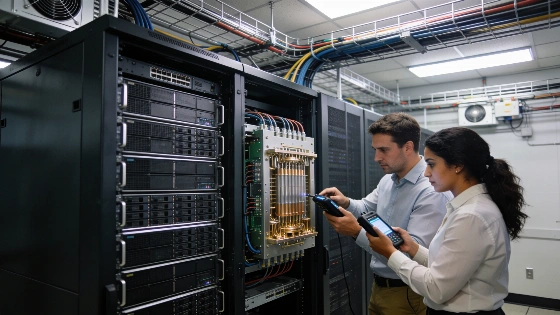
BTQ Technologies and TIDAL PWR have announced a partnership aimed at developing standardized reference architectures for data centers that plan to integrate quantum processing units (QPUs) and post-quantum cryptographic protocols. The collaboration targets the intersection of quantum computing, artificial intelligence (AI), and high-performance computing (HPC), where the convergence of these technologies within shared physical infrastructure presents new operational and security challenges. According to the companies, the goal is to provide data center operators with technical frameworks that move beyond open-ended research projects and toward repeatable, deployable solutions.
As quantum hardware matures, the integration of QPUs into data centers raises questions about procurement, supply chain security, and the safe coexistence of quantum and classical compute stacks. The proposed blueprints will address procurement standards for quantum chips and devices, aiming to reduce supply chain vulnerabilities by establishing trusted vendor assessment criteria. In parallel, the collaboration will define architectural standards for crypto-agility, focusing on the adoption of post-quantum cryptography (PQC) to protect sensitive AI models, inference data, and enterprise information from future quantum-enabled decryption threats. These standards are intended to help operators navigate the transition from classical to quantum-secure infrastructure as quantum computers capable of breaking current cryptographic schemes become more plausible.
Integration and Power Constraints
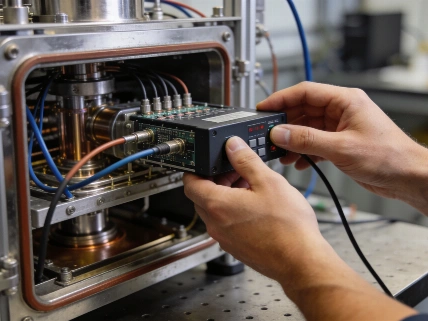
One of the central engineering challenges for next-generation data centers is power availability, especially as AI and quantum workloads demand higher computational density and reliability. TIDAL PWR brings expertise in scalable power generation and site development, while BTQ Technologies contributes quantum systems architecture and security frameworks. The partnership aims to produce facility integration roadmaps that include guidelines for thermal management, power distribution, and structural adaptation to accommodate quantum platforms, including those based on neutral-atom architectures under development by BTQ. These guidelines are expected to address the unique cooling, vibration isolation, and electromagnetic shielding requirements of quantum hardware, which differ significantly from those of conventional servers.
While the announcement outlines a vision for standardized deployment, it does not specify the number of qubits, processor types, or performance benchmarks for the quantum systems to be integrated. No independent technical data or peer-reviewed results have been released to support the proposed architectures. The initial phase of the collaboration will focus on joint technical planning and the creation of foundational reference frameworks, with the intention to expand into commercial and facility-specific deployments in later stages. The companies have not disclosed a timeline for prototype implementation or public release of technical specifications.
Security and Procurement Standards
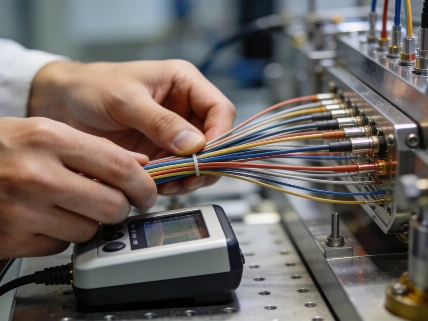
The collaboration emphasizes the need for robust procurement and supply chain standards as quantum hardware becomes commercially available. Establishing trusted vendor criteria is intended to mitigate risks associated with counterfeit or compromised components, which could undermine both quantum and classical security. The architectural standards for crypto-agility will incorporate post-quantum cryptographic algorithms, which are designed to resist attacks from both classical and future quantum computers. These algorithms, currently under evaluation by international standards bodies, are implemented on conventional hardware but are intended to provide long-term security as quantum computing advances.
Facility integration guidelines will also address the physical and operational requirements for deploying quantum systems alongside classical infrastructure. This includes recommendations for power and cooling, as well as structural adaptations to support the installation and maintenance of quantum devices. The companies state that their approach is intended to be repeatable and adaptable for hyperscale data centers, managed service providers, and enterprise operators, but no independent validation of these claims is yet available.
Technical and Industry Context
Integrating quantum processors into data centers presents significant engineering and operational challenges. Quantum devices, such as neutral-atom or superconducting qubit systems, typically require cryogenic temperatures, precise environmental control, and specialized shielding to maintain coherence and minimize error rates. These requirements contrast with the operating conditions of classical servers and AI accelerators, which are optimized for high-density, high-temperature environments. The lack of published technical specifications or performance data from the BTQ and TIDAL PWR collaboration means that the practical feasibility of large-scale quantum-classical integration remains untested in commercial settings.
As of 2026, most quantum processors deployed in laboratory or cloud-accessible environments operate with tens to hundreds of physical qubits, with error rates and coherence times that limit their utility for large-scale computation. Post-quantum cryptography, meanwhile, is being standardized for use on conventional hardware, with algorithms such as lattice-based and code-based schemes under review by organizations including NIST. The transition to quantum-secure infrastructure will depend not only on the availability of quantum hardware but also on the adoption of these cryptographic standards and the development of operational best practices for hybrid data centers.
Physical qubits are the fundamental units of quantum information in a processor, but their practical utility depends on coherence time, gate fidelity, and error rates. Most current quantum computers require extensive error mitigation or correction to perform useful computations, and the integration of quantum and classical systems introduces additional complexity in control, synchronization, and data transfer. The reference architectures proposed by BTQ Technologies and TIDAL PWR represent an early step toward addressing these challenges, but their effectiveness will depend on future technical validation and independent benchmarking.
Understanding the distinction between post-quantum cryptography and quantum cryptography is essential for interpreting this announcement. Post-quantum cryptography refers to cryptographic algorithms designed to be secure against attacks from both classical and quantum computers, but these algorithms run on conventional hardware and do not require quantum devices. Quantum cryptography, by contrast, uses quantum phenomena such as entanglement and superposition to enable protocols like quantum key distribution, which can provide information-theoretic security under certain assumptions. The reference architectures discussed here focus on integrating quantum processors and post-quantum cryptography into data center infrastructure, reflecting the need for both quantum-enabled computation and quantum-resistant security as the field advances.