A 1.27-billion-year-old Martian meteorite found in Algeria is providing rare insight into a previously undocumented period of Mars' geological evolution, according to new laboratory analysis
A meteorite discovered in the Algerian desert is offering scientists a rare window into a long-missing chapter of Mars' geological record. The rock, officially designated Northwest Africa (NWA) 13441, was recovered in 2019 but only recently dated to 1.27 billion years old. Its composition and age are now helping researchers address a gap in the known history of Martian surface processes, spanning from roughly 2.4 billion to 600 million years ago.
Unusual Composition and Age
NWA 13441 stands out among Martian meteorites for both its age and its mineral makeup. Most Martian meteorites that reach Earth are classified as shergottites-igneous rocks formed from solidified magma. However, until now, no shergottite had been identified from the 1.3 to 1.4 billion-year range. Instead, meteorites from this period were limited to much rarer types known as chassignites and nakhlites. The new sample's age was determined through radiometric dating of isotopes, confirming it as the oldest known shergottite from this era.
What makes NWA 13441 particularly significant is its blend of mineral signatures. Alongside typical shergottite features, the meteorite contains isotopes of neodymium-a rare-earth element more commonly associated with chondrites, which are primitive, unmelted meteorites from the early solar system. This combination suggests that some Martian interior reservoirs have remained largely undisturbed since the planet's formation, preserving ancient chemical signatures.
Implications for Martian Geology
The discovery of NWA 13441 provides new constraints on the evolution of Mars' mantle and crust. The presence of neodymium isotopes points to a source region on Mars that has not been sampled by previous meteorites, potentially lying between the so-called "enriched" and "depleted" shergottite reservoirs. This finding supports the idea that Mars' deep interior has experienced less mixing and recycling than Earth's, likely due to the absence of plate tectonics on the Red Planet.
By analyzing the isotopic composition of the meteorite, researchers can reconstruct aspects of Mars' magmatic and volcanic activity during a period for which direct evidence was previously lacking. The study, published in Geochimica et Cosmochimica Acta, highlights how meteorites like NWA 13441 can fill critical gaps in planetary history that are inaccessible to orbiters and rovers.
Laboratory Analysis and Future Work
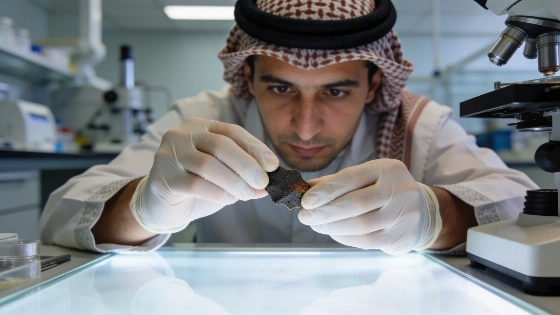
The age and composition of NWA 13441 were established using high-precision mass spectrometry, which measures the ratios of radioactive isotopes and their decay products. This method allows scientists to determine when the rock last crystallized from magma. The meteorite's unique isotopic blend is now being compared with other Martian samples to map out the diversity of source regions within Mars' interior.
Further laboratory studies are planned to investigate the meteorite's trace elements and mineral inclusions, which may reveal additional details about the temperature, pressure, and chemical environment of its formation. These analyses could also help clarify how Mars' volcanic and magmatic processes evolved over time, and how they differ from those on Earth.
Context in Mars Sample Research
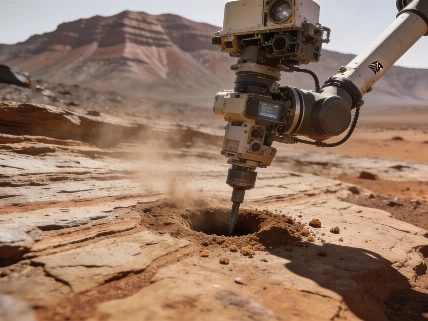
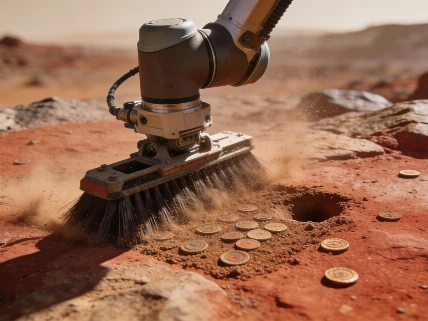
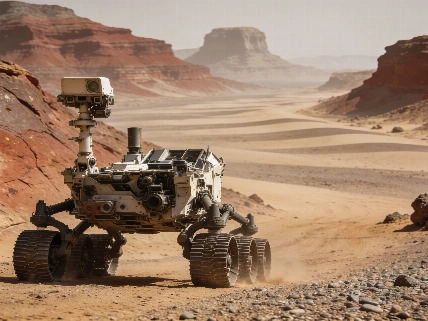
The study of Martian meteorites complements ongoing missions that seek to directly sample the Martian surface. While rovers such as Perseverance are collecting material for eventual return to Earth, meteorites like NWA 13441 provide immediate access to Martian rocks from a range of locations and depths. This approach has already yielded insights into Mars' volcanic history and surface evolution. For example, recent observations of Mars' moons and their interactions with the planet, such as those captured by Perseverance and discussed in coverage of Earth's occultation by Phobos, illustrate the value of combining remote sensing with laboratory analysis of extraterrestrial samples.
As more Martian meteorites are identified and studied, scientists expect to refine their understanding of the planet's internal structure, volcanic history, and the processes that have shaped its surface over billions of years. Each new sample adds a piece to the puzzle of Mars' complex geological evolution.
To interpret the history recorded in meteorites like NWA 13441, researchers rely on radiometric dating-a technique that measures the decay of radioactive isotopes within minerals to determine the time since the rock solidified. This method is especially valuable for planetary science, where direct sampling is limited. By comparing isotopic ratios in meteorites with those in terrestrial rocks and lunar samples, scientists can reconstruct the timing and sequence of events that shaped planetary bodies. However, uncertainties remain, particularly when the meteorite's source region on Mars is unknown or when the rock has experienced alteration during its journey to Earth. Careful calibration and cross-checking with other dating methods are essential to build a reliable chronology of Martian history.