The James Webb Space Telescope has recorded unexpected changes in the rings of Chariklo, a small centaur object between Saturn and Uranus, challenging assumptions about the stability of minor ring systems in the outer solar system.
New observations from the James Webb Space Telescope (JWST) show that the rings around Chariklo-a small body orbiting between Saturn and Uranus-have changed in ways that current models do not fully explain. The results, published in Science Advances, reveal that the opacity of Chariklo's two rings has shifted in opposite directions since ground-based measurements from the last decade. This raises new questions about what shapes ring systems around small objects in the outer solar system.
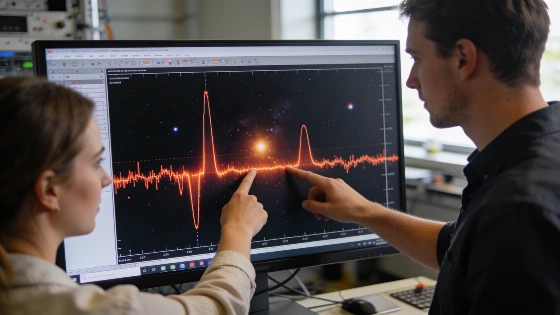
Chariklo's rings are too faint for direct imaging, so astronomers use stellar occultations-when the object passes in front of a distant star-to study their structure. In October 2022, JWST's infrared instruments observed Chariklo as it blocked light from Gaia DR3 6873519665992128512. This was the first time JWST was used for a pre-planned stellar occultation, and the event was carefully coordinated by teams at the European Space Agency (ESA) and NASA.
The new data show that the inner ring, C1R, is now about 50% more opaque, while the outer ring, C2R, is roughly 60% less opaque compared to occultation data from 2013, 2014, and 2017. These numbers come from analyzing how much starlight dipped as Chariklo and its rings passed in front of the background star. The study involved researchers from the Instituto de Astrofísica de Andalucía (IAA-CSIC) and relied on the Gaia mission's precise star catalog.
Chariklo is only about 250 kilometers across, making it the smallest known object in the solar system with a confirmed ring system. Its rings, discovered in 2013, are made of icy particles and orbit at distances of about 390 and 405 kilometers from Chariklo's center. The JWST occultation campaign required careful planning, using Gaia's star positions and accounting for the telescope's orbit 1.5 million kilometers from Earth.
There are several possible reasons for the changes in ring opacity. JWST's higher spatial resolution may have revealed denser and sparser regions within the rings that ground-based telescopes could not see. The physical properties of the ring particles-such as their size or composition-might have changed over the past decade. Another possibility is that JWST's infrared observations are sensitive to different grain properties, so the variability could be due to the wavelength used rather than actual changes in the rings. The radii of the rings have not shifted, which suggests the changes are not from large-scale movement of material but could be due to more subtle processes like particle evolution or migration between rings, as noted in the SpaceDaily summary.
Researchers point out that the current data cannot clearly separate these effects. A follow-up occultation, ideally at multiple wavelengths and with different instruments, would help determine whether the changes are real or an artifact of the observing method. The study's authors note that even small, distant ring systems may be more dynamic than previously thought, challenging the idea that such structures are stable over short timescales. The project involved teams from NASA, ESA, and the Max Planck Society.
This JWST campaign was the first time the telescope was used for a planned stellar occultation of a minor solar system body. The event required precise timing and pointing, as Chariklo's relative speed was just 2.5 kilometers per second-slow enough for detailed sampling of the ring system. Earlier occultation studies of Chariklo's rings used ground-based telescopes, which are limited by atmospheric distortion and lower resolution. The success of this observation shows JWST's potential for high-precision solar system science, in addition to its main mission of studying distant galaxies and exoplanets. The approach is similar to how occultations are used to study planetary atmospheres and faint debris disks.
By combining JWST's infrared sensitivity with the Gaia star catalog, the team was able to detect subtle changes in the rings' structure that would have been missed from Earth. This technical achievement highlights JWST's value for solar system research.
The unexpected changes in Chariklo's rings prompt a new look at how minor ring systems form and survive. Unlike Saturn's massive rings, which are shaped by strong gravity and shepherd moons, Chariklo's rings orbit a much smaller body with weaker gravity and fewer stabilizing forces. The new results suggest that even without major planetary influences, ring systems can change measurably over just a few years.
These findings add to evidence that the outer solar system is more active and complex than once assumed. As with the discovery of superbubbles in nebulae reported in an earlier breakdown, the evolving nature of Chariklo's rings shows the need for repeated, high-resolution observations to track changes. Chariklo's case demonstrates that even small, remote objects can challenge existing models, and that what we know about planetary systems often depends on the limits of our instruments.
Stellar occultation remains a powerful tool for studying faint or distant structures in the solar system. When a foreground object passes in front of a background star, astronomers can measure the dip in starlight to infer the presence, size, and composition of rings, atmospheres, or debris. This method is especially useful for objects too small or faint to image directly, as it relies on precise timing and sensitive detectors. By analyzing the light curve from an occultation, researchers can reconstruct the geometry and optical properties of features that would otherwise remain hidden, making it a key technique in planetary science.