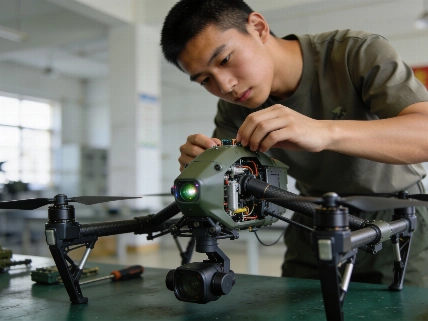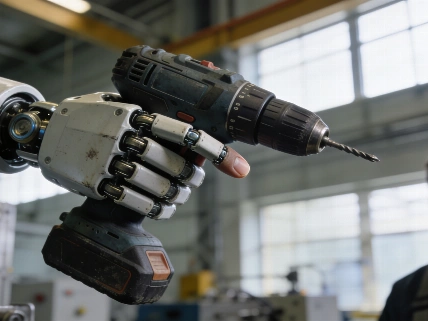
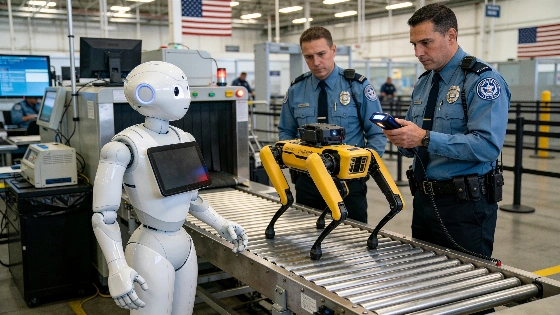
The United States has imposed new restrictions on advanced humanoid and four-legged robots, primarily targeting Chinese manufacturers, citing national security risks and concerns over critical infrastructure vulnerabilities
The United States has enacted a ban on the import of new foreign-made humanoid and quadruped robots, with the policy primarily affecting Chinese manufacturers that dominate the global market for advanced robotic systems. The restrictions, announced by the Federal Communications Commission (FCC) on July 28, also extend to power inverters used in data centers and solar installations, citing the potential for these devices to introduce vulnerabilities into critical infrastructure. The FCC's decision reflects growing concern over the dual-use nature of connected robotics and power electronics, particularly as competition with China intensifies in the fields of robotics and artificial intelligence.
The new measures add advanced humanoid and four-legged robots, as well as certain network-connected power inverters, to the FCC's Covered List-a regulatory tool that prohibits the import, marketing, or sale of equipment deemed to pose unacceptable national security risks. According to the FCC, these categories of devices could be exploited for surveillance, intelligence gathering, or remote control by foreign actors, especially when equipped with cameras, sensors, and network connectivity. The agency also warned that compromised power inverters could be used to disrupt electricity systems, enable unauthorized remote access, or facilitate cyberattacks on critical infrastructure.
Market Impact and Regulatory Scope
The restrictions apply only to newly imported devices requiring FCC authorization, leaving previously approved products unaffected. This forward-looking approach means that existing robots and inverters already in the US market can continue to be sold and operated, but new models from foreign manufacturers-especially those from China-will face significant barriers to entry. Industry data indicates that Chinese companies account for approximately 87 percent of global humanoid robot shipments, with six of the world's ten largest vendors, including Agibot, Unitree, UBTech, Leju Robotics, Engine AI, and Fourier Intelligence, based in China. The new rules are expected to reshape the competitive landscape, potentially benefiting US-based robotics firms such as Figure AI, Agility Robotics, Apptronik, and 1X, which are preparing to scale up commercial production.
While the FCC's order does not constitute a recall of existing devices, it effectively closes the US market to most next-generation Chinese humanoid and quadruped robots. The agency's rationale centers on the risk that advanced robots, when integrated into sensitive environments, could be leveraged for unauthorized data collection or remote manipulation. The FCC's Covered List now explicitly bans new versions of these devices from import or sale in the United States, a move that has drawn condemnation from Chinese authorities, who accuse Washington of politicizing trade and imposing sanctions on what they describe as "groundless pretexts."
Critical Infrastructure and Broader Security Concerns
The inclusion of power inverters in the ban reflects a broader regulatory focus on the security of critical infrastructure. Power inverters, which convert direct current (DC) to alternating current (AC) in solar energy systems, battery storage, and data centers, are increasingly network-connected and thus susceptible to cyber exploitation. The FCC cited the risk that foreign-made inverters could be used to disrupt power delivery, steal operational data, or provide a foothold for cyberattacks targeting the broader economy. These concerns echo previous regulatory actions targeting telecommunications and networking equipment from foreign suppliers.
Recent developments have also seen US airlines, including United Airlines and Delta Air Lines, prohibit humanoid robots on commercial flights due to safety and operational concerns. This trend highlights the growing intersection of robotics, public safety, and regulatory oversight, as advanced robots become more capable and more widely deployed in commercial and public settings. The regulatory environment remains dynamic, with ongoing debate over the balance between national security, technological innovation, and international cooperation in artificial intelligence and robotics.
Industry Response and International Tensions
Supporters of the new restrictions argue that they will strengthen domestic manufacturing and reduce dependence on foreign technology, particularly in sectors deemed vital to national security. However, critics warn that reduced competition could slow innovation and limit consumer choice. Chinese officials have condemned the US measures, calling for greater international collaboration in artificial intelligence and robotics rather than expanded technology restrictions. The policy shift comes as the US seeks to assert greater control over its technology supply chains and limit the potential for foreign-made connected devices to introduce systemic risks.
The rapid pace of robotics development means that limiting imports to previously approved models could erode the competitiveness of foreign vendors in the US market. As new generations of robots incorporate more advanced sensors, actuators, and AI-driven capabilities, regulatory barriers may shape not only market access but also the trajectory of technical progress. For context, recent advances in humanoid robot locomotion, such as those described in research on machine-learning frameworks for real-world walking, illustrate the accelerating capabilities of these systems and the challenges regulators face in keeping pace with technical change.
Understanding the distinction between automation and autonomy is essential in evaluating the risks and benefits of advanced robotics. Automation refers to the execution of predefined tasks by machines, often under human supervision or control, while autonomy implies the ability of a system to make independent decisions and adapt to changing environments without direct human intervention. Regulatory frameworks must account for the degree of autonomy, the nature of human oversight, and the potential for dual-use applications when assessing the safety and security implications of deploying advanced robots in sensitive settings.