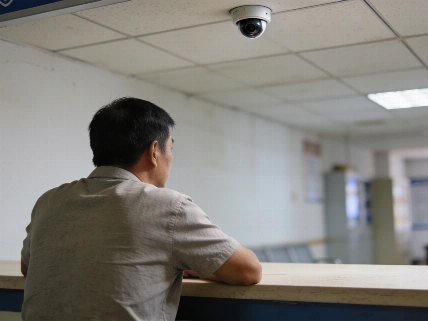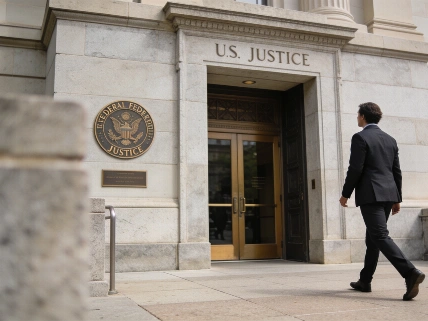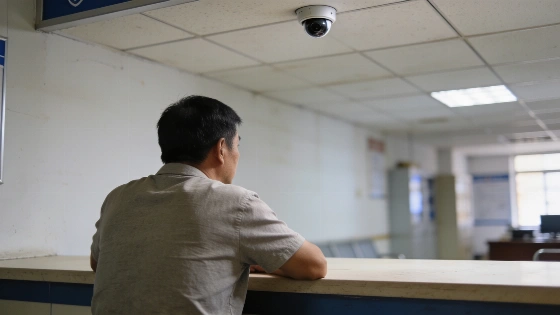
A Chinese researcher says AI could turn fragmented credit and governance programs into predictive profiling. A 2025 study of one city's scoring system found that low classifications could bring police monitoring
In one Chinese city, adults began with 1,000 social-credit points that could change under 389 rules, according to a 2025 Stanford study. Some rules covered political conduct, including petitioning government authorities. People placed in the lowest classification could face police monitoring, while rural residents appeared to have fewer opportunities to earn rewards than urban residents. The local program offers a case study of the scoring practices that concern researchers weighing AI's possible role; it is not a nationwide measure.
China's social-credit framework is not a single national score assigned to every citizen. It is a collection of systems run by different agencies and local governments, including financial-credit reporting, regulatory blacklists for individuals and companies, local behavioral-rating programs, and systems monitoring public officials. Financial-credit assessments are distinct from punitive legal or regulatory lists, which can affect access to finance, markets, and other services. Behavioral-rating programs have operated in only a limited fraction of Chinese cities.
The policy framework dates to the State Council's 2014 social-credit planning outline, which set out trustworthiness mechanisms covering government affairs, commercial conduct, social behavior, and the judiciary. Implementation has focused substantially on corporate compliance, legal enforcement, and administrative reliability, rather than a universal individual score.
From scoring to profiling
Researcher Lin Jianxing warns that AI could analyze people's activities and financial histories, along with information about their relationships and other available data. Predictive algorithms could then identify people as resembling groups assessed as future risks, shifting decisions from responses to observed conduct toward predicted risk.
That could mean reduced access to services or increased scrutiny for someone who has not broken the law, potentially without their knowledge. Lin's analysis raises concerns about opaque decisions, discrimination, and limited opportunities to challenge an algorithmic classification. The study, published in the Journal of Sichuan Normal University, warns that AI could turn the programs into a "large-scale surveillance tool." It was funded by a Chinese government-backed project examining social governance and institutional innovation.
What the evidence shows
The Stanford study examined a local system where points changed according to compliance with 389 rules. The reported criteria included ordinary compliance as well as political behavior, including petitioning government authorities. Residents in the lowest classification could face police monitoring, and the study reported an urban-rural imbalance in opportunities to earn reward points.
The local program is part of a broader, fragmented framework rather than evidence of one centralized score for the entire population. Researchers have described social-credit mechanisms as multiple programs run by different agencies, with monitoring and discipline also directed at government employees and public officials.
The 2025 study warns about the possible use of AI in these existing systems; it does not report that China has launched a unified nationwide AI scoring system. Chinese policy has promoted the gradual integration of AI into government services and public administration, while presenting it as a tool for public-service delivery and proactive governance. The study's concern is that combining behavioral, financial, relational, and other data for predictive profiling could trigger scrutiny or affect service access without transparent notice or an effective way to challenge a decision.
Supporters might argue that such tools could identify people at risk of serious crime or those in need of help; the study says any use must avoid penalizing innocent people and excessive intrusion.