Astronomers in the Northern Hemisphere can observe all five naked-eye planets and the Harvest Moon this September as earlier sunsets and mild weather create optimal conditions for stargazing
September delivers a convergence of astronomical events rarely matched in the Northern Hemisphere. For observers equipped with even modest binoculars or a backyard telescope, the month brings a sequence of planetary alignments and a prominent Harvest Moon, all set against the backdrop of lengthening nights and favorable weather. The result is a window of opportunity for direct observation that will not be repeated until planetary orbits align again under similar seasonal conditions.
Planetary alignments and lunar encounters
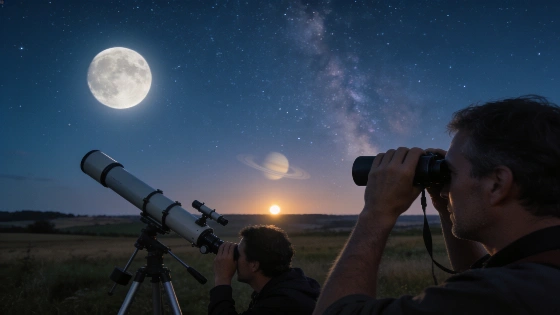
This September, all five planets visible to the unaided eye-Mercury, Venus, Mars, Jupiter, and Saturn-can be observed, though not simultaneously. Venus and Mercury appear low in the evening sky after sunset, while Mars and Jupiter rise before dawn. Saturn remains visible for much of the night, and Neptune reaches opposition on September 26, offering its closest and brightest appearance of the year for those with telescopic access. The Moon's path brings it near several of these planets, including a close approach to Jupiter before dawn on September 8 and a conjunction with Venus after dark on September 13 and 14. The full Harvest Moon rises on September 26, followed closely by Saturn, creating a striking pairing for observers in clear conditions.
Seasonal changes and observing conditions
The rapid shift toward longer nights accelerates as the autumnal equinox approaches on September 22, when day and night reach near parity across the globe. After this date, darkness dominates the Northern Hemisphere, extending the window for astronomical observation. September's weather typically remains mild, allowing extended viewing sessions without the discomfort of winter cold. The only persistent obstacle is cloud cover, which can obscure even the most favorable alignments.
These conditions also enhance the visibility of the Milky Way's brightest regions. The star-rich constellations Sagittarius and Scorpius, which dominate summer evenings, begin to set in the west, while the Great Square of Pegasus rises in the east, signaling the transition to autumn skies. For many, this is the last chance of the year to observe the Milky Way's central bulge in the evening before it disappears below the horizon.
Auroras and equinox effects
September's equinox brings more than just longer nights. The orientation of Earth's magnetic field during this period increases the likelihood of auroral activity, as interactions with the solar wind become more favorable. While auroras remain unpredictable and depend on solar conditions, the statistical chance of visible displays rises around the equinoxes. This effect is well documented, though not guaranteed, and adds another layer of potential reward for those who venture out under dark skies.
For those tracking planetary phases, Venus's changing appearance has drawn attention in recent months, as reported earlier. September's planetary lineup offers a complementary opportunity to observe multiple worlds in a single season, each at a different stage in its orbit.
Key dates and observational highlights
Several dates stand out for targeted observation. On September 8, the Moon passed close to Jupiter before dawn. Venus and the Moon form a close pair after sunset on September 13 and 14, while Neptune's opposition on September 26 coincides with the full Harvest Moon and Saturn's appearance shortly after moonrise. These alignments are best viewed from locations with minimal light pollution and unobstructed horizons, especially for low-lying planets like Mercury and Venus.
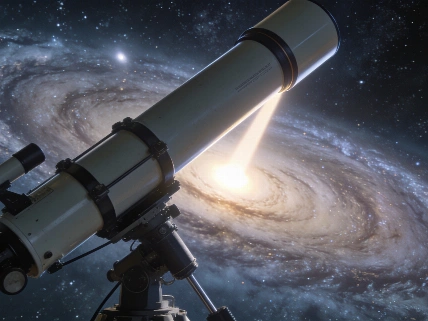
For those seeking to maximize their viewing, a pair of stargazing binoculars or a small telescope can reveal additional detail, including Neptune's faint blue disk and Saturn's rings. The combination of planetary encounters, lunar phases, and seasonal transitions makes September a uniquely productive month for both casual and dedicated observers.
Understanding the interplay between planetary orbits, lunar motion, and Earth's axial tilt is central to predicting when such alignments will occur. The timing of the Harvest Moon, for example, is defined as the full Moon closest to the autumnal equinox, which can shift from year to year. Planetary visibility depends on their positions relative to the Sun and Earth, with opposition marking the point when a planet is directly opposite the Sun in the sky and thus at its brightest and closest to Earth. These cycles, governed by celestial mechanics, create the patterns that make certain months-like this September-stand out for astronomical observation.