NVIDIA has released Nemotron 3.5 Lightning, an open-weight model designed for high-volume, repetitive agent workloads. The system aims to reduce cost and latency for developers running autonomous agents on local hardware or in data centers
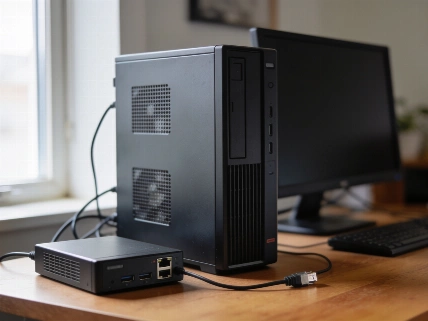
NVIDIA has introduced Nemotron 3.5 Lightning, a new open-weight language model intended to handle the repetitive, high-frequency tasks that underpin many autonomous software agents. Unlike larger foundation models typically used for complex reasoning, Nemotron 3.5 Lightning is designed to execute routine operations-such as tool calls, command execution, and task delegation-at lower computational cost and with reduced latency. The model is available for local deployment on NVIDIA hardware, including DGX Spark, Jetson systems, and GeForce RTX 5090 graphics cards, as well as for use in data centers.
Nemotron 3.5 Lightning employs a mixture-of-experts architecture, with a total of 30 billion parameters but only 3 billion activated per token during inference. This approach is intended to provide the capacity of a larger model while keeping compute requirements closer to those of a smaller system. According to NVIDIA, this design allows developers to reserve larger, more expensive models for planning and complex reasoning, while offloading repetitive execution steps to Lightning. The model is released under the OpenMDW-1.1 license, with weights, training data, and recipes made available for further research and fine-tuning.
Performance and Evaluation
In internal testing, NVIDIA reports that Nemotron 3.5 Lightning can deliver up to four times the output speed of other models with similar parameter counts. On the PinchBench benchmark, which evaluates agent tool-use accuracy and speed, the model achieved 86 percent accuracy while completing 10,000 tasks 30 percent faster than Qwen3.6 35B at comparable accuracy levels. The model supports speculative decoding, a method that proposes multiple tokens in parallel to improve throughput, and includes multi-token prediction capabilities. Two additional draft models, DSpark and DFlash, are provided for different inference scenarios.
The model has been trained with agent frameworks such as OpenClaw and Hermes Agent in mind, aiming to improve the reliability of tool calls and reduce latency in repetitive workflows. NVIDIA's NeMo tools are available for developers seeking to fine-tune the model or conduct reinforcement learning and environment-based evaluations. However, all reported performance figures are based on company testing, and independent verification of these results is not yet available.
Deployment and Integration
Nemotron 3.5 Lightning is positioned for use at the execution layer of autonomous agents, where rapid, repeated actions are required. The model can be integrated into local systems or cloud environments, giving developers flexibility to run workloads closer to data sources or user devices. NVIDIA highlights compatibility with a range of inference platforms and agent frameworks, including Ollama, LM Studio, Amazon SageMaker JumpStart, Google Cloud, Microsoft Foundry, and Oracle Cloud Infrastructure. The model can be downloaded from repositories such as Hugging Face and ModelScope, or accessed through NVIDIA's own platform and OpenRouter.
To support more efficient agent workflows, NVIDIA is also promoting NeMo Switchyard, a model-routing library that directs different tasks to the most appropriate model. For example, complex requests can be routed to a larger reasoning model, while Nemotron 3.5 Lightning handles routine execution. This approach is intended to reduce the overall compute cost for always-on agents that perform thousands of small actions over extended periods. However, the effectiveness of such routing strategies will depend on the reliability of task classification and the ability to avoid misrouting tasks that require higher-level reasoning.
Limitations and Open Questions
While Nemotron 3.5 Lightning is released as an open model with accessible weights and training data, the transparency of its dataset composition and filtering processes remains limited. The company has not disclosed detailed information about the sources or representativeness of the training data, which may affect the model's generalizability and bias profile. Additionally, the reported performance improvements are based on internal benchmarks and may not reflect real-world deployment conditions, especially in environments with unpredictable workloads or novel tool integrations.
As with other large language models, Lightning's reliability in safety-critical or high-stakes applications will depend on careful integration, monitoring, and fallback mechanisms. The model's mixture-of-experts design introduces additional complexity in debugging and interpretability, and its suitability for regulated or sensitive domains has not been independently assessed. Developers are advised to evaluate the model's behavior in their specific operational context and to maintain appropriate human oversight where necessary.
Mixture-of-experts models like Nemotron 3.5 Lightning use multiple specialized subnetworks, or "experts," with only a subset activated for each input. This design can improve computational efficiency by focusing resources on the most relevant parts of the model for a given task. However, it also introduces challenges in training stability, interpretability, and consistency across different inputs. In agent systems, the choice of model for each task-whether for planning, execution, or tool use-can significantly affect both performance and safety. Careful evaluation of routing strategies and fallback mechanisms is essential to ensure that routine tasks are handled efficiently without compromising reliability or oversight.