IEEE will host its first International Leadership Conference in Budapest, focusing on collaborative leadership and knowledge transfer between generations in science, technology, engineering, and mathematics. The event aims to address the challenges of rapid technological change and workforce transition
Leadership in science, technology, engineering, and mathematics (STEM) is undergoing a structural shift as organizations confront the limits of traditional hierarchical models. The IEEE International Leadership Conference, scheduled for October 3-4, 2026, in Budapest, is designed to address the need for collaborative leadership across generations. The event will bring together early-career professionals, mid-career managers, and established experts to examine how knowledge transfer, mentorship, and multidirectional learning can strengthen decision-making and innovation in STEM environments.
IEEE organizers have identified several drivers for this shift, including the accelerating pace of technological development, the need to maintain public trust in technical systems, and the demographic reality that a significant portion of the STEM workforce is nearing retirement. These factors increase the risk of knowledge loss and institutional memory gaps, particularly as new technologies outpace established training and management practices. The conference theme, 'Honoring Expertise, Accelerating Potential,' reflects an explicit focus on bridging experience gaps and equipping professionals with practical tools for collaborative leadership.
Knowledge Transfer and Leadership Models
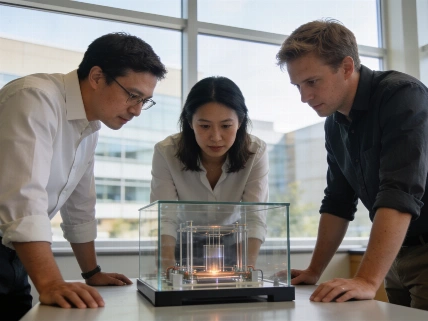
Traditional leadership structures in STEM have often relied on top-down decision-making and one-way mentorship from senior staff to junior colleagues. However, IEEE's conference will highlight the limitations of this approach in the context of complex, interdisciplinary challenges. Instead, the event will promote a model of shared leadership, where expertise flows in multiple directions and professional development is seen as a continuous, collective process. This approach is intended to support more resilient organizations capable of adapting to rapid change and integrating diverse perspectives into technical and ethical decision-making.
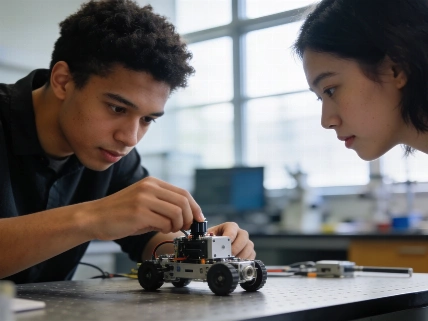
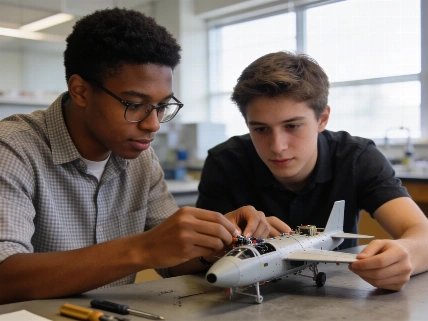
Panels and interactive sessions will address how organizations can design systems that support ongoing knowledge sharing, elevate emerging voices, and retain the contributions of experienced professionals, including those approaching retirement. The conference will also examine how cross-generational collaboration can help organizations critically assess legacy practices, identify persistent failures, and adapt to new requirements in technical, regulatory, and social contexts.
Historical Context and Decision-Making
IEEE conference organizers emphasize that technological innovation in STEM rarely occurs in isolation or as a sudden leap. Instead, advances typically build on decades of accumulated research, lessons learned, and institutional knowledge. The event will explore how leaders can integrate historical perspective into current decision-making, reducing the risk of repeating past mistakes and improving the ability to assess both opportunities and risks. This is particularly relevant as organizations face the dual challenge of onboarding new talent and ensuring that critical expertise is not lost during workforce transitions.
One focus will be on the mechanisms that enable effective knowledge transfer, such as structured mentorship programs, cross-functional teams, and intentional documentation of technical processes. The conference will also address the need for leadership development programs that are inclusive, collaborative, and designed to support evolving career trajectories rather than linear advancement through fixed hierarchies.
Organizational Implications and Strategic Advantage
For organizations, the shift toward cross-generational collaboration is not simply a matter of culture but a strategic necessity. As technical systems become more complex and the pace of change accelerates, the ability to integrate diverse expertise and maintain institutional memory becomes a key factor in long-term success. The conference will examine how organizations can create environments where knowledge flows freely, diverse perspectives are valued, and leadership is defined by contribution rather than title or tenure.
IEEE's event is expected to provide practical frameworks for designing leadership pipelines that sustain innovation and trust. Attendees will be encouraged to consider questions such as how to make knowledge sharing continuous, how to involve emerging professionals earlier in decision-making, and how to keep experienced staff engaged as valued contributors. The conference will also address the distinction between management and leadership, emphasizing that effective leadership increasingly depends on drawing insights from across generations and roles.
According to IEEE, the conference will feature a mix of discussions, panels, and interactive sessions, but specific session formats and participant numbers have not been disclosed. The event is positioned as a response to measurable workforce trends: in the United States and Europe, for example, engineering and technical fields report that up to 30% of senior professionals are expected to retire within the next decade, raising concerns about knowledge continuity and organizational resilience. Registration for the conference is expected to open in the coming months.
Understanding the distinction between management and leadership is central to the conference's agenda. In technical organizations, management typically involves executing established processes and ensuring operational efficiency, while leadership requires setting direction, integrating new knowledge, and making decisions that balance technical, ethical, and social considerations. As STEM fields become more interdisciplinary and the workforce more diverse, leadership models that support multidirectional knowledge exchange and collaborative problem-solving are increasingly seen as essential for sustainable progress.