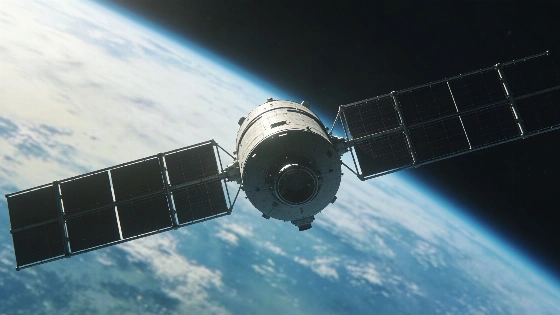
Project Suncatcher sent a prompt to Google's Gemma 4 model and returned a three-line haiku from orbit, while exposing the power and radiation limits Google must test before networking spacecraft
A single onboard processor can run for roughly 20 minutes before the satellite's available energy becomes a constraint.
That limit framed Google's first machine-learning prompt processed aboard a satellite. During a ground-station communication window, engineers sent a request to the Gemma 4 open model to write a haiku about its surroundings. The reply came back as: "Blue marble below / Data streams in silent grace / Starlight feeds my fundamental."
The exchange established a basic command loop. The satellite received instructions from Earth and processed them onboard; its return transmission carried the generated response back to the ground. Engineers also tested space-themed limericks and used prompts to retrieve telemetry about operating conditions. Google called the demonstration its first AI response from a data-center-class TPU in orbit, part of the company's longer-term research into running AI workloads on satellites.
Power and radiation
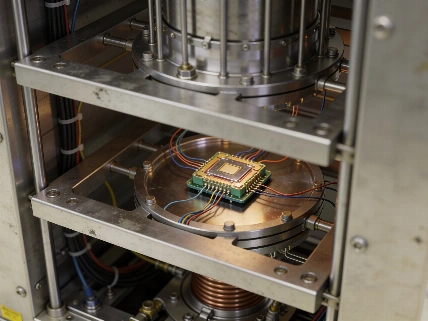
The spacecraft carries four Google TPUs, but its power system allows only one to operate at a time. Electrical generation reaches approximately 1 kilowatt, and an individual processor session can last roughly 20 minutes before energy becomes a constraint.
Radiation testing is still ahead. In low Earth orbit, high-energy particles can flip bits and alter values stored in memory. The resulting errors can corrupt calculations without necessarily activating standard monitoring systems. Google says its next tests will assess how the TPUs perform under radiation exposure and thermal stress.
Google's earlier particle-accelerator experiments on Earth suggested that inference workloads could tolerate radiation better than model training. Orbital tests will show how the hardware behaves under sustained exposure, alongside the temperature fluctuations of space.
Network plans
Google launched the prototype on October 1, 2026, aboard a SpaceX Falcon 9 rocket, alongside more than 100 other spacecraft. The launch began the orbital test of data-center-class TPU computing. Google said the spacecraft spent roughly three weeks commissioning its host system and TPU trays and running preliminary machine-learning workloads before engineers sent the Gemma 4 prompt. The first orbital AI response was reported on October 30 in Google's announcement.
Project Suncatcher aims to connect spacecraft into an orbital computing network. Google plans to test two interconnected satellites in 2027, a step intended to demonstrate networking and distributed computing beyond the single-satellite trial. Google has described the project as a research effort, rather than a commercial orbital data-center service.
Google's approach emphasizes coordinated satellites sharing processing tasks. Starcloud and Cowboy Space are also exploring orbital computing, with initial approaches focused more on running inference aboard individual spacecraft.
Scaling the idea also depends on launch costs. Google's research suggests SpaceX's fully reusable Starship could require approximately 1,800 flights to achieve notable cost reductions.