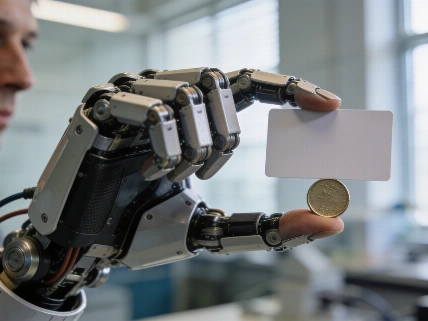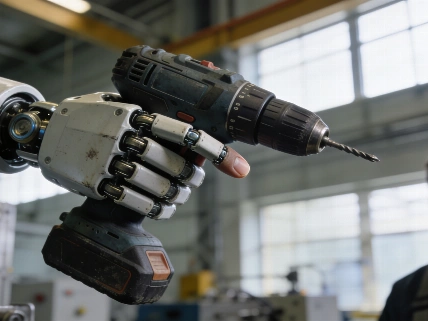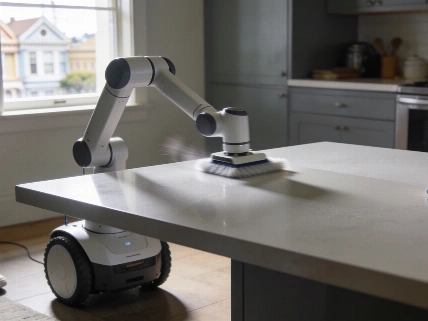
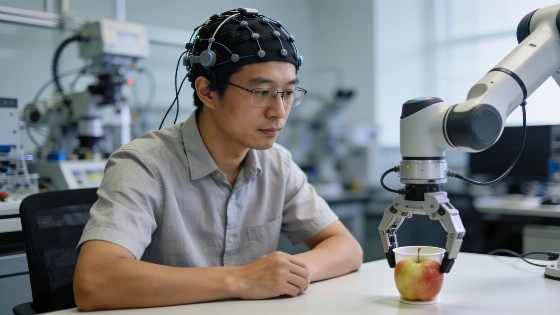
BrainCo has introduced a non-invasive brain-computer interface platform that enables users to control robots with EEG-detected brain signals, aiming to improve intent recognition and generate training data for embodied AI systems
Chinese technology company BrainCo has announced a new brain-computer interface (BCI) platform designed to allow users to control physical robots using only their brain signals. The system, presented at the World Artificial Intelligence Conference in Shanghai, relies on a non-invasive electroencephalogram (EEG) headset to detect electrical activity from the scalp. Artificial intelligence algorithms then interpret these signals to infer the user's intended action, which is translated into commands for a connected robot. According to BrainCo, the platform is compatible with a range of third-party robotic hardware, including humanoid robots, robotic arms, and quadruped robots.
In demonstration scenarios, users wearing the EEG headset were able to direct a robotic arm to grasp objects such as cups or apples without physical input. The company emphasizes that its approach does not require surgical implants, distinguishing it from invasive BCI projects such as Neuralink. Instead, BrainCo's system uses surface-level sensors, which are less risky but typically provide lower signal fidelity and are more susceptible to noise. The company has previously focused on non-invasive BCI and prosthetic technologies, and this new platform extends those efforts to general-purpose robotics.
Intent Recognition and Data Generation
While the ability to control robots hands-free attracts attention, BrainCo argues that the platform's greater significance may lie in its potential to generate high-quality training data for embodied AI. Embodied AI refers to artificial intelligence systems embedded in physical machines that interact with the real world. Training such systems requires large volumes of data capturing how humans perform tasks and interact with their environment. BrainCo claims its platform can help address this bottleneck by combining real-world robot execution, human demonstrations, and virtual simulations to create richer datasets for training future robots.
Industry observers note that the lack of representative, high-quality real-world data remains a major obstacle for the development of advanced robotic systems. For example, a recent report from HSBC analysts highlighted that China's humanoid robot sector still faces significant data shortages, which limits progress toward commercial deployment. Companies such as Tesla and Nvidia are also investing in platforms to benchmark and evaluate robot policies, as seen in initiatives like NVIDIA's RoboLab for real-world robot policy evaluation.
Technical and Practical Limitations
Despite the promise of brain-controlled robotics, the technology faces substantial technical and practical challenges. Non-invasive EEG systems typically capture weaker and noisier signals than implanted devices, which can limit the accuracy and reliability of intent recognition. BrainCo has not yet released detailed performance metrics or independent evaluations of its platform. Demonstrations to date have occurred in controlled environments, and it remains unclear how the system will perform in real-world, unstructured settings. The company has not disclosed the number of successful trials, error rates, or the extent of human intervention required during demonstrations.
Another limitation is the generalizability of intent recognition across different users and tasks. EEG signals vary significantly between individuals, and training AI algorithms to interpret intent reliably remains an open research problem. The platform's compatibility with multiple robot types is a technical strength, but it also introduces complexity in translating abstract brain signals into actionable commands for diverse hardware. Regulatory and safety considerations will also be critical if the technology is to move beyond laboratory demonstrations to broader deployment.
Context and Implications
BrainCo's announcement reflects a broader trend in robotics and AI toward more direct and intuitive forms of human-machine interaction. If the platform can be shown to work reliably outside controlled demonstrations, it could enable more natural collaboration between humans and robots in industrial, medical, or assistive settings. However, the current evidence is limited to company-led demonstrations, and independent verification will be necessary to assess the platform's robustness, safety, and practical value.
The development also highlights the ongoing race between Chinese and US technology firms to advance embodied AI and robotics. As companies seek to overcome data shortages and improve robot learning, platforms that can generate high-quality, representative training data may play a pivotal role. For now, the BrainCo system remains an early-stage demonstration, and its impact will depend on future technical validation and real-world testing.
Brain-computer interfaces (BCIs) are systems that enable direct communication between the human brain and external devices, such as computers or robots. Non-invasive BCIs, like those using EEG, detect electrical activity from the scalp without surgery, but typically offer lower signal resolution than implanted devices. Decoding user intent from EEG data is a complex challenge due to signal noise, individual variability, and the limited spatial resolution of surface electrodes. Advances in AI algorithms have improved intent recognition, but robust, generalizable performance across users and environments remains a significant technical hurdle for practical deployment.