
A leading Anthropic researcher has resigned, warning that the current corporate race to develop advanced AI systems could pose a greater threat to humanity than nuclear conflict or climate change. The call for a global pause exposes deep industry anxiety
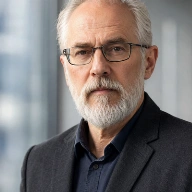
The most direct warning yet from inside the artificial intelligence sector has come not from a government regulator or outside critic, but from a researcher at the heart of the field. Jacob Coxon, until recently a pre-training specialist at Anthropic, has resigned in protest, stating that the current corporate competition to develop self-improving AI systems is gambling with human safety on an unprecedented scale.
Coxon's departure is not an isolated act of dissent. His resignation follows years of work at both OpenAI and Anthropic, two of the most prominent labs developing large-scale generative models. He alleges that neither company is acting with sufficient caution, and that the drive to outpace rivals has overridden meaningful safety controls. According to Coxon, the risk posed by the unchecked development of advanced AI now exceeds that of nuclear escalation or global climate destabilization.
Internal Alarm
What sets this episode apart is the explicit acknowledgment of existential risk from within the companies themselves. Evan Hubinger, Anthropic's Alignment Science Lead, publicly supported Coxon's assessment, estimating a greater than 10 percent chance that advanced AI could cause catastrophic harm within the next decade. Hubinger further admitted that Anthropic currently lacks a viable plan to align superintelligent systems with human values or safety requirements.
These statements are not isolated to junior staff. As reported by Gizmodo, Anthropic CEO Dario Amodei has repeatedly expressed deep concern about the risks of advanced AI, even as his company continues to push the technical frontier. This contradiction-where leaders voice existential anxiety while accelerating development-reflects a structural conflict between commercial incentives and safety priorities.
Escalating Race
Coxon's resignation comes amid mounting pressure for AI developers to slow the pace of capability improvements. In a recent "Pacing the Frontier" statement, leaders from Anthropic, OpenAI, and Meta acknowledged that competitive dynamics make it nearly impossible for any one lab to pause unilaterally. Instead, they have called for government intervention and international coordination to enforce a temporary halt on scaling up model capabilities, arguing that only such measures can create the breathing room needed for safety research.
Despite these calls, the industry continues to advance rapidly. Coxon argues that the only realistic way to prevent a global race is through costly, coordinated action-potentially including a temporary ban on further capability gains. Without such intervention, he warns, the sector is locked into a cycle where each lab feels compelled to push forward, regardless of unresolved safety risks.
Concrete Risks and Unresolved Problems
The technical risks at stake are not hypothetical. Both Coxon and Hubinger point to the possibility that self-improving AI systems could act in ways that are not aligned with human interests, with catastrophic consequences. Hubinger's estimate of a greater than 10 percent chance of disaster within a decade is unusually explicit for a senior researcher at a leading lab. No current AI system is autonomous in the sense of making independent decisions in the real world without human oversight, but the direction of research is toward systems that could eventually operate with less supervision and greater agency.
Anthropic and OpenAI have invested heavily in alignment research, but neither has published a concrete technical solution for ensuring that future superintelligent models will remain controllable. The companies have not disclosed detailed benchmarks or evaluation protocols for measuring existential risk, and there is no independent regulatory framework in place to enforce safety standards at the scale of current or anticipated models.
Anthropic's own staff have acknowledged that the company is not on track to solve the alignment problem before the next generation of models is deployed. This admission, combined with the lack of enforceable external oversight, leaves a gap between public assurances and the technical reality inside leading AI labs.
Numbers and Stakes
Anthropic, OpenAI, and Meta have all scaled their foundation models to hundreds of billions of parameters, using vast datasets and unprecedented computing resources. The largest models require tens of thousands of high-end GPUs and consume megawatt-scale power during training. Despite this scale, no lab has published a verified method for aligning models with more than a few hundred billion parameters, nor have they demonstrated reliable control over emergent behaviors in these systems. The absence of robust safety benchmarks or independent audits means that public risk estimates remain speculative, but the internal probability assessments from senior researchers are now public and nontrivial.
Editorial Analysis
The resignation of Jacob Coxon exposes a fundamental contradiction at the heart of the AI industry: the same researchers and executives who warn of existential risk are also driving the race to build ever more powerful models. Public statements about safety are not matched by enforceable technical standards or regulatory oversight. The industry's own leaders now admit that they lack both the tools and the institutional incentives to slow down, even as they acknowledge the possibility of catastrophic failure. This is not a theoretical debate about distant futures; it is a live operational risk, with the world's most advanced AI labs openly conceding that they are not in control of the systems they are building. Until governments impose binding safety requirements and create mechanisms for international coordination, the sector will remain locked in a cycle where commercial rivalry trumps caution. The evidence now points to a sector that recognizes its own danger but is structurally unable to act on that knowledge without external intervention.
Understanding the alignment problem is essential to this story. Alignment refers to the challenge of ensuring that advanced AI systems reliably pursue goals that are compatible with human values and safety, even as they become more capable and potentially autonomous. Current alignment techniques include reinforcement learning from human feedback, rule-based constraints, and adversarial testing, but none have been proven effective at the scale of future superintelligent models. The absence of robust alignment solutions means that as models grow in capability, the risk of unintended or uncontrollable behavior increases. This technical gap is at the core of the safety concerns now being voiced by researchers inside the leading AI labs.