AGIBOT has introduced four new robots at WAIC 2026, including a full-size humanoid, an educational platform, an industrial manipulator, and a dexterous robotic hand, with live demonstrations in manufacturing and service environments
Chinese robotics company AGIBOT has presented four new robotic systems at the World Artificial Intelligence Conference (WAIC) 2026 in Shanghai, aiming to expand the use of embodied artificial intelligence in commercial, educational, and industrial settings. The new lineup includes the A3 Ultra humanoid robot, the X2 EDU educational platform, the G2 Max industrial robot, and the OmniHand 3 Ultra-M dexterous hand. Each system targets a distinct application area, with the company emphasizing real-world deployments and integration with existing workflows.
The A3 Ultra is a full-size humanoid robot designed for commercial and public environments. According to AGIBOT, the robot stands 1.74 meters tall, weighs 60 kilograms, and features 51 degrees of freedom. It is equipped with a range of sensors, including 3D LiDAR, RGB-D, fisheye, and binocular cameras, as well as GPS, RTK, and UWB positioning modules. The company reports that the A3 Ultra can carry up to 5 kilograms per arm and operate for up to eight hours on a single charge, with options for direct charging, battery swapping, and autonomous recharging. The robot is powered by NVIDIA Thor hardware and is intended for tasks such as material handling, inspection, and customer service in complex environments.
For educational and research use, AGIBOT introduced the X2 EDU, a humanoid platform standing 1.3 meters tall with 29 degrees of freedom. The X2 EDU is designed with a modular, open hardware architecture, allowing developers to add sensors, computing modules, and end effectors. The company states that the robot can handle payloads up to 3 kilograms and is intended for robotics research and STEM education.
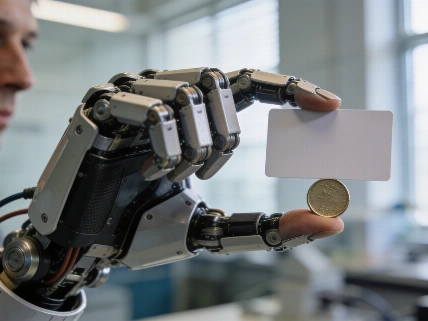
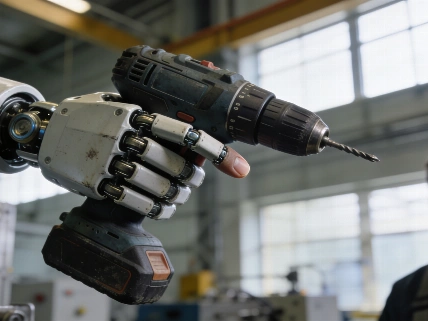
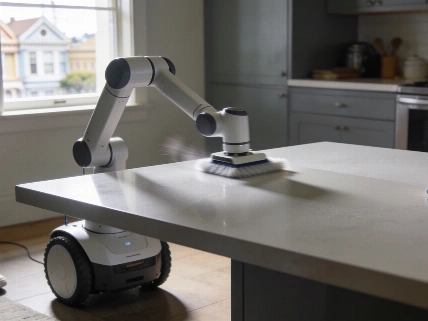
In the industrial domain, the G2 Max robot is built for heavy-payload material handling and palletizing. It features force-controlled arms, adjustable working height, omnidirectional mobility, and battery-swapping capability to support continuous operation in factory environments. The OmniHand 3 Ultra-M, a 630-gram robotic hand with 20 active degrees of freedom, is designed for precise manipulation tasks and can grip objects weighing up to 5 kilograms. The hand uses vision-based tactile sensors to support contact-rich manipulation.
Industrial Deployment and Evidence
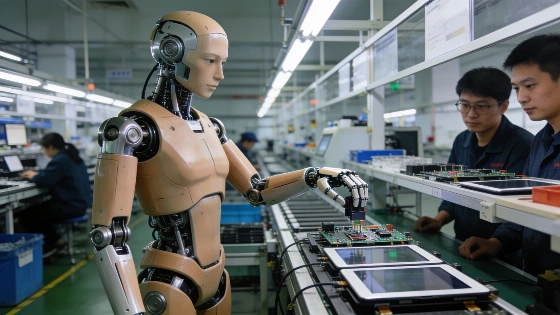
AGIBOT has highlighted several real-world deployments of its robots, particularly in manufacturing. At Longcheer Technology's facility in Nanchang, G2 humanoid robots have been integrated into a live tablet production quality inspection line. The robots autonomously collect materials, place components, interact with inspection equipment, and return finished products. According to AGIBOT, the integration process took 36 hours, and the robots now support approximately 3,000 tablets per shift, with more than 64 hours of continuous operation and downtime reportedly kept below 4 percent. The company claims that these robots operate alongside existing factory equipment without requiring major changes to the production line, adapting to changing conditions and maintaining production speed.
While AGIBOT's demonstrations focus on industrial and commercial use, the company also reports deployments in tourism, transportation, and service environments, where robots assist with visitor guidance, information services, and navigation. However, the extent of independent evaluation and long-term reliability in these settings remains limited to company-reported figures and demonstrations.
Technical and Operational Context
The new robots are positioned as part of a broader trend toward embodied AI-systems that combine machine learning, perception, and physical actuation to perform tasks in the real world. The A3 Ultra's sensor suite and onboard computing are intended to support autonomous navigation and manipulation, but the company has not disclosed the extent of human supervision required during deployment or the frequency of manual intervention in case of failure. The G2 Max and OmniHand 3 Ultra-M are designed for repetitive industrial tasks, but their performance outside controlled demonstrations has not been independently verified.
AGIBOT's approach emphasizes rapid integration with existing manufacturing lines, contrasting with more simulation-focused evaluation methods. This focus on real-world deployment echoes recent efforts in the robotics field to bridge the gap between laboratory benchmarks and operational reliability. For example, platforms such as NVIDIA's RoboLab have been developed to benchmark robot policies before real-world deployment, as discussed in recent coverage of simulation-based robot evaluation. However, AGIBOT's claims of rapid deployment and low downtime are based on internal reporting, and independent audits of safety, reliability, and human oversight have not yet been published.
Limitations and Open Questions
Despite the technical specifications and reported deployments, several limitations remain. The company has not provided detailed data on failure rates, safety incidents, or the nature of human intervention during operation. It is unclear how the robots handle unexpected events, rare edge cases, or changes in the production environment that fall outside the scope of the initial integration. The degree of autonomy in navigation, manipulation, and error recovery has not been independently assessed, and the long-term impact on human workers and production efficiency is not yet established.
As with many robotics demonstrations, the distinction between automated and autonomous operation is critical. While AGIBOT's robots are described as capable of autonomous navigation and manipulation, the extent to which they operate without human supervision or intervention is not fully transparent. Regulatory approval, safety certification, and compliance with international standards for collaborative robotics have not been detailed in the company's public materials.
Embodied AI refers to systems that combine perception, decision-making, and physical action in the real world. Unlike purely software-based AI, embodied systems must interpret sensor data, plan actions, and interact with unpredictable environments. Achieving reliable autonomy in such systems requires robust perception, adaptive control, and effective error recovery. In practice, most deployed robots operate with varying degrees of human supervision, and the transition from controlled demonstration to routine, unsupervised operation remains a central challenge in robotics engineering.