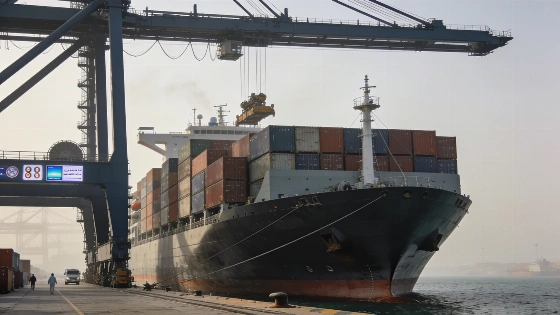
The program will test whether trapped-ion computing can improve maritime optimization workflows using Quincus freight data and classical benchmarks. The announcement reports no performance results
Dynamic berth allocation and vessel stowage are among the combinatorial problems the research program will examine. As operational networks grow, classical exact solvers can struggle to keep pace, according to the announcement.
The Abu Dhabi Maritime Academy (ADMA), the training and R&D arm of AD Ports Group (ADX: ADPORTS), has entered a multi-year collaboration with Quincus and Quantinuum (NASDAQ: QNT). The partners will evaluate hybrid quantum computing alongside high-performance computing (HPC) and artificial intelligence algorithms. Quantinuum described the initiative in its third-quarter FY2026 disclosures as a research-and-applications collaboration to explore these technologies for complex maritime and logistics applications, rather than a commercial deployment. The announcement describes a research plan, not a demonstrated improvement.
Testing the workflow
The initiative was formalized after discussions at the Quantum Innovation Summit in Dubai. Its stated purpose is to test algorithms against live operational network data and compare their performance with established classical heuristics. Quincus will provide freight network parameters and an AI-driven production testbed for that benchmarking.
The work will examine whether algorithms run on trapped-ion architectures can improve solution quality. Asset utilization is another proposed measure, with carbon efficiency also included in the evaluation. The announcement gives no results, benchmark values or details about which algorithms will be tested.
Partners and roles
Quantinuum will provide computing resources and algorithmic compilation expertise. Developers will have access to its Helios trapped-ion processor through the company's full-stack software platform; the announcement does not say that the planned comparisons have already run on the processor. In its third-quarter FY2026 earnings call, Quantinuum CEO Ilyas Khan said the company had achieved a reported logical-fidelity milestone on Helios. A contemporaneous earnings summary put the system's logical fidelity at 99.9995%; this hardware measure concerns quantum error performance, not maritime logistics performance.
Quincus supplies operational data and the testbed. ADMA will define constraints and validation criteria for the maritime tasks. Its remit includes terminal asset allocation and berth scheduling. Multi-modal fleet dispatching is another area it will specify.
The scope spans maritime fleet operations and container supply chains. Bulk transport logistics is included as a separate focus. The challenges named in the announcement include dynamic berth allocation and fuel-efficient voyage routing, where assignments must be evaluated against changing network conditions.
Evidence to come
A hybrid workflow combines quantum and classical computing resources, while the proposed evaluation also brings HPC and AI into the comparison. Quantinuum's third-quarter earnings call describes the collaboration as an effort to explore quantum, AI and HPC for maritime and logistics applications. The announcement does not specify how tasks will be divided among those methods, what data windows will be used or how the partners will quantify a meaningful improvement. Those details will matter when interpreting any future benchmark.
Quantinuum's hardware roadmap provides further context for the research: the company said Sol was in system integration and assembly, with completion targeted for the first quarter of 2027 and commercial availability planned for the second half of that year. Its Apollo system is targeted for 2029. These are company-wide development milestones, not project deadlines for the Abu Dhabi collaboration.
This optimization project addresses a different problem from quantum-security migration, covered in earlier quantum-safe reporting. ADMA's technology roadmaps also include the Quantum and AI Blue Initiative, established with Vernewell Group.