A 15,000 TEU container ship concept using small modular reactors has received Approval in Principle from the American Bureau of Shipping, marking a step toward nuclear propulsion in commercial shipping but raising new safety and engineering questions
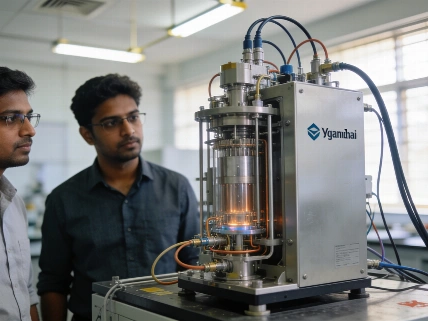
The American Bureau of Shipping (ABS) has granted Approval in Principle (AIP) for a conceptual design of a 15,000 twenty-foot equivalent unit (TEU) container ship powered by small modular reactors (SMRs). Developed by the Korea Research Institute of Ships & Ocean Engineering (KRISO), the project aims to adapt nuclear propulsion-previously limited to military vessels-for civilian merchant shipping. The design centers on two marine Molten Salt Reactors (MSRs), a type of SMR that uses liquid fuel salt at low pressure, reducing the risk of sudden pressure loss or containment failure compared to conventional high-pressure water reactors.
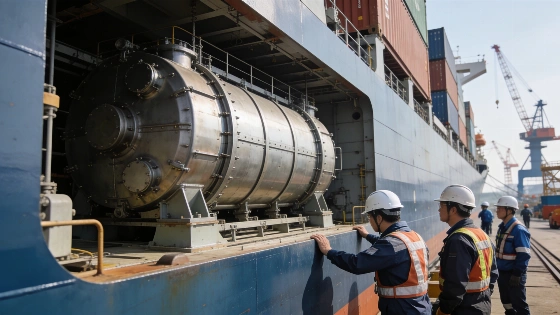
The proposed vessel eliminates traditional fuel oil storage and exhaust systems, repurposing that space for additional cargo. The dual-reactor compartment is positioned at the center of the Neo-Panamax hull, with heavy shielding to minimize structural stress and protect the reactors from side impacts. Crew quarters are relocated forward to reduce radiation exposure. According to KRISO, the design integrates both MSR units with an energy storage system (ESS) in a parallel configuration. This setup allows the ship to maintain electrical stability if one reactor requires maintenance or output adjustment, with the ESS providing immediate reserves for maneuvering and preventing thermal cycling in the nuclear core.
Engineering and Safety Challenges
Transitioning nuclear propulsion to commercial shipping introduces significant engineering and regulatory challenges. The steady thermal output of MSRs must be balanced with the variable propulsion demands of a large container ship. KRISO reports that hydrodynamic simulations using scaled models in a deep-sea engineering tank informed the hull design, which is intended to maintain a 25-knot cruising speed even in adverse sea conditions. However, the system's real-world performance, especially under emergency scenarios or prolonged operation, remains untested outside simulation and laboratory environments.
ABS's Approval in Principle is an early-stage regulatory milestone, indicating that the concept meets basic safety and engineering criteria on paper. It does not constitute authorization for construction or operation. Further development will require detailed structural mapping, integration of the reactor systems with the hull, and comprehensive safety validation under international maritime and nuclear regulations. The project's next phase will address these requirements, but no timeline for prototype construction or sea trials has been announced.
Consortium and Technical Details
The design is the result of a collaboration between KRISO, Samsung Heavy Industries, and the Korea Atomic Energy Research Institute (KAERI), which developed the "MARINA" MSR unit. The vessel's power plant is engineered to operate for years without refueling, a potential advantage for long-haul shipping routes. By removing fuel oil tanks and exhaust funnels, the design increases cargo capacity, but also concentrates critical systems and shielding in the vessel's midsection, raising questions about survivability and emergency response in the event of collision or reactor malfunction.
KRISO's engineering team emphasizes that both the reactor's safety and the ship's operational characteristics must be considered together. The parallel power-sharing configuration is intended to provide redundancy, but the effectiveness of this approach in real-world maritime conditions has not yet been demonstrated. The project remains at the conceptual stage, with no independent verification of safety claims or operational reliability.
Numerical Context
The proposed ship is designed to carry 15,000 TEU containers and operate at a sustained speed of 25 knots. The power system consists of two marine Molten Salt Reactors, each supplying continuous thermal energy for propulsion and onboard systems. According to KRISO, the integrated energy storage system is sized to provide immediate electrical reserves for maneuvering, but specific capacity figures and endurance under fault conditions have not been disclosed. The design eliminates conventional fuel storage, reallocating that volume for cargo, but the total increase in payload capacity has not been independently verified.
Molten Salt Reactors (MSRs) are a class of nuclear reactor that use liquid fuel salt as both fuel and coolant, operating at low pressure to reduce the risk of catastrophic pressure failure. In marine applications, MSRs offer the potential for long-duration operation without refueling, but introduce new challenges in reactor control, shielding, and emergency response. Approval in Principle (AIP) is a preliminary regulatory step that confirms a design's compliance with basic safety and engineering standards, but does not guarantee operational approval or commercial deployment. Full certification requires extensive testing, integration, and validation under real-world conditions, including demonstration of safe operation in maritime environments.