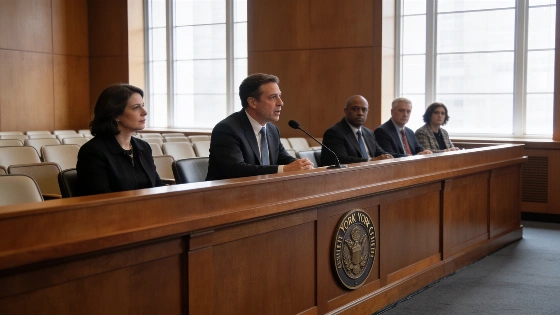
OpenAI, Google, Anthropic and Meta are expected to testify under oath before all 51 New York City Council members on October 5, while SpaceXAI faces a subpoena after not confirming its participation.
SpaceXAI faces a subpoena to appear before the New York City Council on October 5 after, according to the Council, it failed to respond to lawmakers seeking testimony about artificial intelligence risks. The order turns a planned policy hearing into a direct legal test of whether a major AI developer will submit to public scrutiny. At the time of reporting on September 28-29, no independent report indicated that the subpoena had been challenged in court or that the hearing had been canceled.
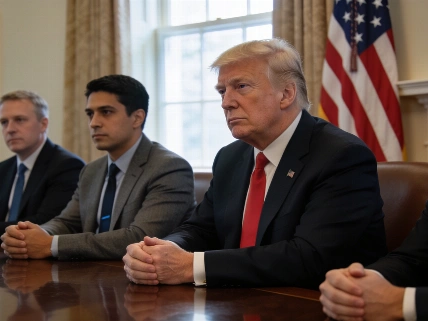
OpenAI, Google, Anthropic and Meta have agreed to attend the rare Committee of the Whole hearing. All 51 Council members will participate, and company representatives are expected to answer questions under oath about the systems they develop and the risks those systems may create for consumers and public infrastructure. The Council described the planned testimony as the first public testimony under oath from major AI companies in this proceeding. Its official Council release confirms the October 5 date and the companies' attendance.
The Council has authority under the New York City Charter to compel testimony during investigations into city affairs. Its stated position is that subpoenas may be used when lawmakers exercise that authority. If SpaceXAI refuses to comply, the Council says it may seek enforcement through the New York State Supreme Court. The subpoena is the sharpest action yet in the Council's effort to move AI oversight beyond voluntary corporate statements.
The sequence of events is significant. The Council sent requests for voluntary participation between September 15 and 17. Meta agreed before the subpoena process began. Google and OpenAI initially declined or failed to confirm participation, then agreed after lawmakers warned that subpoenas could follow. Anthropic also agreed to attend before the October hearing. The Council characterizes SpaceXAI as the only invited company that did not respond and did not confirm its participation, which is why it received the subpoena.
Speaker Julie Menin has said that lawmakers need direct answers as AI capabilities expand and that technology companies should address legislation now under consideration. The hearing will include national experts in AI safety, technology and consumer protection. Their testimony is intended to help the Council examine proposed measures rather than establish that any of those measures has already become law.
One proposal would create a whistleblower incentive program for people who report violations involving AI companies. Another would establish a private right of action for New Yorkers harmed by AI agents. Lawmakers are also considering independent third-party validation for certain systems before deployment. The available record does not establish the final wording, scope or legal status of any of these proposals.
The central numerical fact is the scale of the hearing: 51 Council members will question representatives from four companies that have agreed to appear, while a fifth company, SpaceXAI, is being compelled to attend on October 5. The Council sent its voluntary requests between September 15 and 17 and issued the SpaceXAI subpoena on September 28. The available material provides no benchmark scores, incident totals, model specifications, sample sizes, p-values, confidence intervals or independent safety measurements for the systems under discussion.
That absence matters scientifically. A hearing is a governance and accountability process, not a controlled performance study. To support a quantitative claim about an AI system, investigators would normally define a target population, specify test tasks in advance, report the number and selection of cases, measure error rates or other endpoints, and provide uncertainty estimates such as confidence intervals. Independent replication and clear laboratory affiliations would further help distinguish a robust finding from a company assertion. None of those study details is supplied for the October proceeding.
Research institutions such as MIT and Stanford routinely distinguish between a model's performance on a defined benchmark and its behavior after deployment in a changing environment. The same distinction appears across scientific work reported in journals such as Nature: a result measured under one protocol does not automatically generalize to every user, language, device, or operational setting. Testimony may identify which evaluations companies have performed, but it cannot substitute for publishing the underlying methods and data needed to assess reproducibility.
AI agents make the Council's questions especially consequential because software that can perform actions on a user's behalf creates accountability problems beyond ordinary text generation. Yet the available material does not specify which agents, permissions, tools or operating environments the companies will discuss. Without those details, claims about risk must remain tied to governance and potential safeguards rather than inflated claims about capability.
Human oversight is equally important. A company executive appearing under oath does not make the underlying system transparent, and a third-party assessment would not automatically prove safety in every environment. Validation can examine defined properties under defined conditions; it cannot replace operational monitoring, incident reporting or clear responsibility when systems affect people and infrastructure. Even highly reproducible laboratory measurements, including the kind associated with institutions such as CERN, must be interpreted within the conditions under which they were obtained.
New York City's proposals focus on mechanisms that could make responsibility easier to assign after an AI system causes harm. A whistleblower incentive could encourage reporting of violations. A private right of action could give affected New Yorkers a route to seek redress. Independent validation could require outside assessment before certain systems are deployed. Each remains under consideration, so its eventual scope and practical effect are unresolved.
The local proceeding also sits within a larger national dispute over how existing laws should apply to increasingly capable AI systems. The federal position described in an earlier analysis places political weight on the race with China and existing regulatory powers, while New York City is testing a more confrontational route based on direct testimony and possible legal compulsion.
That distinction is the real value of the October 5 hearing. New York City is not yet imposing the proposed safeguards, and the Council has not demonstrated that the companies violated any rule. It is creating a public record in which major developers must address risks, legal accountability and possible external scrutiny directly. That is a stronger starting point for AI governance than voluntary assurances alone, but its credibility will depend on whether lawmakers convert testimony into precise, enforceable requirements rather than another cycle of broad warnings.