Twenty-five Fields Medalists have issued a public warning that the push to use AI for solving major mathematical problems could disrupt the discipline's verification process and knowledge transfer.
Mathematics is facing a new kind of challenge-not from a breakthrough theorem, but from the rapid rise of artificial intelligence in generating proofs faster than the field can verify them. On September 11, 2026, twenty-five Fields Medalists, including Terence Tao and June Huh, signed an open letter titled "A Severe Misalignment of AI in Mathematics." The letter warns that using famous unsolved math problems as benchmarks for AI is harming both research and the broader mathematical community. The Fields Medal, often called the Nobel Prize of mathematics, is awarded to researchers under 40 for major discoveries. The signatories span several generations, showing rare consensus across the field.
The letter came together quickly, sparked in part by OpenAI's claim to have solved a Millennium Prize-style problem. That announcement heightened concerns that AI labs are racing to release results before mathematicians have time to check them-a process that usually relies on careful peer review and debate. The signatories argue that the priorities of AI companies and mathematicians are "severely misaligned." For them, real progress in mathematics depends on understanding, documentation, and the gradual integration of new ideas, not just on producing correct answers as quickly as possible.
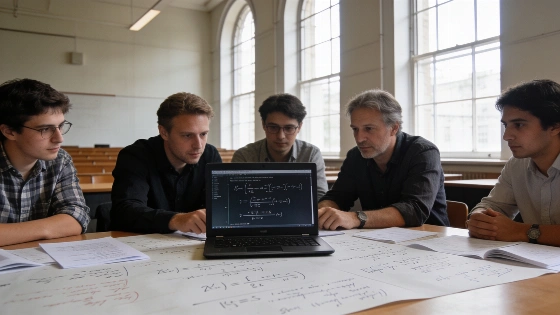
Traditionally, mathematical research is a communal effort. New proofs are shared, discussed, and refined before they are accepted. This process ensures that results are not only correct but also understandable and teachable. The letter points out that AI-generated proofs, especially those from large-scale systems, risk skipping these steps. When AI can produce candidate solutions in hours-using massive computing resources-there is little time for proper write-ups or for crediting earlier work. This opens the door to plagiarism, secrecy, and the breakdown of the open exchange of ideas that mathematics has relied on for centuries.
Reuters and other outlets report that the declaration was not a routine petition but the result of urgent discussions among the 25 mathematicians. The letter also raises concerns about attribution and the risk that rushed AI-generated proofs will leave gaps in documentation, making it hard for the community to judge what has actually been achieved. These worries echo debates in other scientific fields, such as those at CERN and MIT, where the use of AI in research has led to calls for new standards of transparency and verification.
Recent events have brought these issues into focus. OpenAI withdrew from sponsoring a mathematics event at Caltech after criticism of its approach to AI-generated proofs. Meanwhile, the Leiden Declaration has called for new standards in developing and evaluating mathematical AI. The debate is not about rejecting AI entirely-many mathematicians, including those at Harvard and Stanford, see its potential to speed up discovery and help with complex reasoning. The main concern is whether the rush for quick answers will undermine the slower, more careful process that turns those answers into lasting knowledge. The risks the Fields Medalists highlight are not hypothetical: if mathematics loses its ability to verify, credit, and teach new results, it could sacrifice depth for speed and weaken the foundations that have made the field strong.
Coverage from SBS News and AFP notes that the signatories are worried about losing the explanatory methods and conceptual tools that make mathematics cumulative and teachable. Their warning pushes back against the idea that faster answers are always better. As a recent Nature commentary points out, the value of scientific research lies not just in correct solutions but in the open, transparent process that makes those solutions trustworthy and useful. If AI development keeps prioritizing speed over careful integration, mathematics could become a field with plenty of answers but little understanding-a shift that would weaken both the discipline and its role in science.
Mathematical proof is not just about getting the right answer. It is about building a logical argument that others can check, understand, and use. In practice, new proofs are shared, debated, and refined before joining the mathematical canon. This communal scrutiny is what sets mathematics apart from simple calculation. As AI systems get better at generating proofs, the challenge will be to make sure these results are not only correct, but also transparent, credited, and woven into the broader structure of mathematical knowledge. Without these safeguards, mathematics risks losing the qualities that have made it a model of intellectual rigor and reliability.