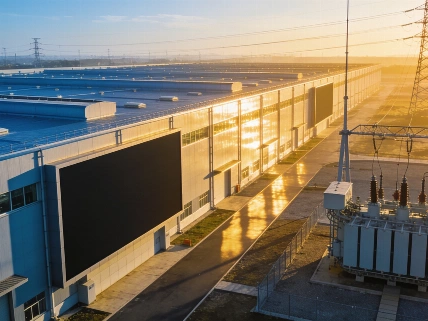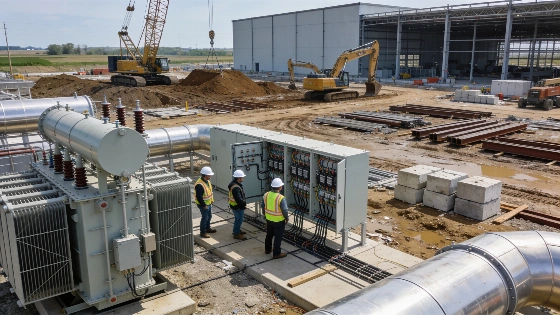
The AI boom is pressing against the practical limits of data-center construction. Cooling may relieve part of that strain, but the available figures do not show how much capacity it could save.
AI's infrastructure challenge is the difficulty of building the facilities needed to run these systems. Cooling is part of that challenge because it adds electrical demand and can place pressure on the power infrastructure serving data centers.
Google's AI processed 9.7 trillion tokens in May 2024. By May 2026, its monthly volume had reached 3.2 quadrillion, a reported 300-fold increase. Token volume measures AI usage; it does not by itself quantify the electricity or water consumed, cooling performance, or the number of data centers needed to serve that demand.
The U.S. Department of Energy is assessing cold underground thermal-energy storage, or Cold UTES, as one approach to data-center cooling. Its project, "Reducing Data Center Peak Cooling Demand and Energy Costs with Underground Thermal Energy Storage," is led by the National Laboratory of the Rockies under DOE's Office of Geothermal. The project models a 1-gigawatt data center in each of two markets, Virginia and Arizona, over a 30-year planning horizon.
The DOE analysis examines projected cooling loads alongside the facilities' electrical demand and the substations, transmission lines, and distribution networks that serve them. Cold UTES is designed to store cooling potential underground and use it during peak-demand periods. The project evaluates whether shifting cooling loads could reduce peak electrical demand and energy costs, minimize water use, increase available computing capacity, and limit power-system infrastructure costs. DOE says its analysis found that Cold UTES can provide cost-effective industrial-scale cooling solutions for data-center and grid operators.
The work is a technical and economic feasibility assessment, not a report of a technology already deployed across data centers. Its modeled benefits do not establish how many facilities might be avoided or show that cooling can replace the need to build additional capacity. The DOE project is described in its Cold UTES project overview.
Better cooling is therefore presented as a possible way to ease some infrastructure bottlenecks, not as a proven substitute for building data centers. Science Report has also covered cloud infrastructure in its account of the AWS Physical AI Toolchain, but that report does not establish whether cooling can reduce data-center demand. The figures here document token growth; they do not measure cooling performance.