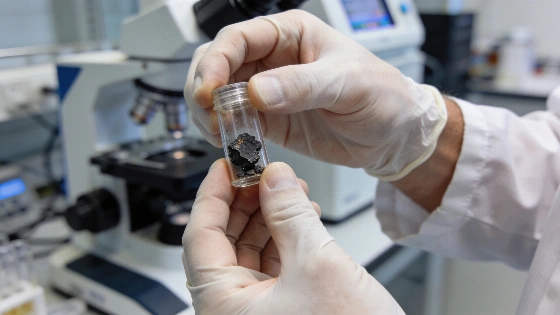
Laboratory analysis of asteroid material returned to Earth has identified all five nucleobases of DNA and RNA, as well as multiple amino acids, suggesting the chemical ingredients for life are common in the solar system and beyond
Recent laboratory studies of material collected from asteroids have confirmed the presence of key organic molecules essential for life, including all five nucleobases found in DNA and RNA, as well as a broad range of amino acids. These findings, based on samples returned by missions such as OSIRIS-REx and Hayabusa2, indicate that the chemical precursors to biology are not unique to Earth but are widespread in the solar system and likely throughout the galaxy.
Organic Molecules in Returned Samples
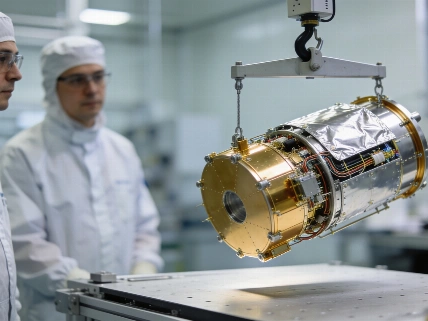
In 2023, NASA's OSIRIS-REx mission delivered samples from the near-Earth asteroid Bennu to terrestrial laboratories. Analysis revealed all five nucleobases-adenine, guanine, cytosine, thymine, and uracil-alongside 14 of the 20 amino acids used by terrestrial life. The Japanese Hayabusa2 mission, which returned material from asteroid Ryugu, also identified the full set of nucleobases, including uracil, a component of RNA. These results were obtained using advanced mass spectrometry and chromatography techniques, which allow scientists to separate and identify trace organic compounds in complex mixtures.
Detection Beyond the Solar System
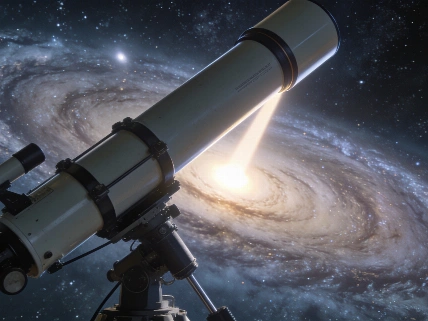
Radio astronomy has extended the search for life's building blocks to interstellar space. Astronomers have cataloged over 350 molecules in space, with about 180 classified as complex organic molecules (COMs). Among these, roughly 30 are considered prebiotic candidates-molecules that could have contributed to the origin of life. Notably, the four-carbon sugar erythrulose, the first true sugar detected in space, was found in molecular clouds near the center of the Milky Way. These discoveries rely on the identification of characteristic spectral lines, but the increasing complexity of molecules leads to overlapping signals, limiting the size of molecules that can be confidently detected.
Limits and Future Missions
Despite the progress, there are significant observational and analytical challenges. As molecules become larger and more complex, their spectral signatures overlap, making unambiguous identification difficult. This limitation constrains current astronomical surveys, but ongoing improvements in instrumentation and data analysis are gradually expanding the detectable range. Upcoming sample-return missions, including Japan's Hayabusa2 and China's Tianwen-2, are expected to provide additional material for laboratory analysis, potentially revealing even more complex organic molecules. The search for ribose, a sugar central to RNA, remains a priority for future studies.
Implications for Life's Origins
The detection of nucleobases and amino acids in asteroids, meteorites, and interstellar clouds supports the view that the chemical ingredients for life are abundant in star-forming regions. While these molecules are not evidence of life itself, their widespread presence suggests that prebiotic chemistry is a common process in planetary systems. The resilience of these compounds, even after exposure to the harsh conditions of space and planetary formation, highlights the robustness of organic chemistry beyond Earth. As new missions return more pristine samples, researchers hope to clarify the pathways by which life's building blocks assemble in space. These discoveries build on a growing body of astronomical research, including large-scale surveys that have mapped billions of cosmic objects and their chemical environments, as seen in efforts such as the largest 2D sky survey to date.
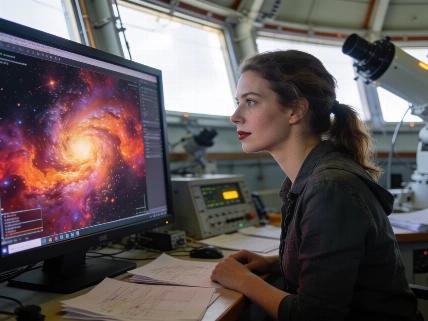
To understand how scientists identify molecules in space, it is important to consider the role of spectroscopy. This technique involves measuring the interaction of electromagnetic radiation with matter, producing characteristic spectral lines that serve as fingerprints for specific molecules. In radio astronomy, molecules emit or absorb radiation at precise frequencies depending on their structure. By analyzing these spectral patterns, astronomers can infer the presence and abundance of various compounds, even in distant molecular clouds. However, as molecules grow more complex, their spectra become crowded and harder to interpret, setting practical limits on what can be detected remotely. Laboratory analysis of returned samples complements these observations by allowing direct chemical identification under controlled conditions.