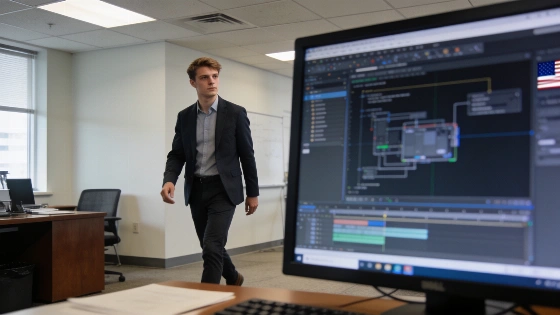
xAI has released Grok Bot, an AI assistant that operates its own virtual computer to perform multi-step digital tasks with limited human oversight. The beta is available to select subscribers, raising questions about reliability and workplace integration
xAI, the artificial intelligence company led by Elon Musk, has launched Grok Bot, a software agent designed to autonomously execute digital tasks by controlling a dedicated virtual computer in the cloud. Unlike conventional AI assistants that generate text or offer suggestions, Grok Bot is intended to interact directly with software applications, navigating interfaces and performing multi-step workflows without requiring continuous user input. The system is currently available in beta for SuperGrok Heavy, Cursor Ultra, and Cursor Teams Premium subscribers on desktop and iOS, while enterprise users can join a waitlist for future access.
Grok Bot Controls Software Through a Virtual Computer
Grok Bot's approach departs from typical API-based integrations. Instead of relying on explicit connections to each service, the Bot operates through the same user interfaces as a human, entering information, navigating websites, and progressing through tasks as needed. This design aims to address a persistent limitation in current AI agents: many workplace tools lack dedicated APIs or machine control protocols, making direct automation difficult. By granting each Bot its own virtual machine, xAI enables longer and more complex task chains, such as editing documents within an application or completing multi-step processes that would otherwise require repeated human intervention.
Human Users Shift From Operators to Supervisors
According to xAI, Grok Bot is engineered to return to the user only when human approval is necessary, shifting the user's role from active operator to supervisor. The Bot can also learn new workflows through demonstration—users can show the system how to perform a task, which it then saves as a reusable routine. Corrections and feedback are incorporated into future executions, potentially reducing the need for repeated instruction. Grok Bot's memory allows it to retain context from previous conversations and corrections, enabling it to resume unfinished work and follow up on stalled tasks. Over time, xAI claims, the Bot may become more proactive in seeking clarification or approval when required.
Multiple Grok Bots Can Collaborate on the Same Project
Grok Bot is designed to function as part of a team of AI agents, with multiple Bots able to collaborate on different aspects of a project. Shared context and assignment passing are supported, and group chats can coordinate several Bots under a single project. This multi-agent capability is intended to streamline complex workflows, though the system's reliability in real-world environments remains to be established. The beta release is limited, and xAI has not yet published independent evaluations or systematic performance data.
Workplace Automation Could Benefit Legacy Software
For US businesses, Grok Bot's ability to operate existing software interfaces directly could be significant, as many organizations rely on legacy tools without AI integrations. However, the absence of detailed reliability metrics and the potential for errors in complex or poorly documented workflows highlight the need for careful supervision. The system's current deployment is restricted to select subscribers, and broader testing will be necessary to determine its effectiveness and safety in diverse workplace settings. Related developments in workplace automation, such as the deployment of collaborative robots for physical tasks, have also raised questions about human oversight and system adaptability—see, for example, the recent evaluation of a humanoid robot designed to reduce strain during shared lifting tasks in a study of ergonomic robot collaboration.
Performance and Reliability Remain Unverified
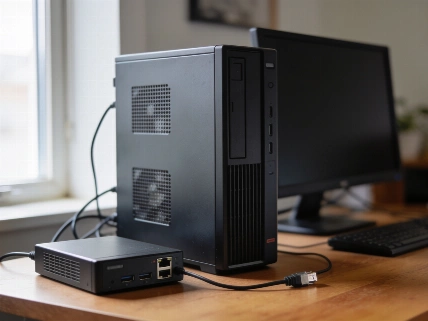
According to xAI, each Grok Bot operates on a dedicated virtual computer hosted in the cloud, allowing it to interact with applications as a human would. The company has not disclosed the number of Bots deployed, the average task duration, or the frequency of human intervention required during beta testing. No independent audits or peer-reviewed studies of Grok Bot's performance have been released. The system's ability to handle extended task chains and recover from errors in unscripted environments remains unverified outside of company-managed demonstrations.
Automation and Autonomy Are Not the Same
Understanding the distinction between automation and autonomy is essential when evaluating systems like Grok Bot. Automation refers to the execution of predefined tasks with minimal variation, often requiring human setup or oversight. Autonomy, by contrast, implies the ability to make independent decisions, adapt to new situations, and recover from unexpected failures without direct human control. Most current AI agents, including Grok Bot, operate within a spectrum between these extremes, with varying degrees of supervision, memory, and adaptability. The effectiveness and safety of such systems depend not only on technical capability but also on the clarity of human oversight and the transparency of system limitations.