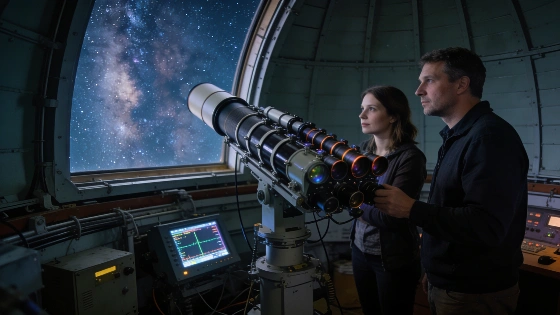
Astronomers using the MOTHRA instrument have observed the Helix Nebula dispersing its outer layers into the interstellar medium, providing direct evidence of stellar material recycling that will enrich future generations of stars
For the first time, astronomers have directly observed the process by which a dead star's remains are absorbed back into the interstellar medium, closing the loop on the life cycle of sun-like stars. The Helix Nebula, a well-studied planetary nebula located about 650 light-years away in the constellation Aquarius, has become the focus of new research that captures the transition from visible stellar debris to diffuse galactic gas.
Observing the End of a Star
The Helix Nebula is the remnant of a star similar in mass to the Sun that exhausted its hydrogen fuel and expelled its outer layers into space. This ejected material forms a glowing shell of gas, while the star's core contracts into a white dwarf. Over time, the nebula expands and its material disperses, but the precise moment when this matter merges with the surrounding interstellar medium (ISM) has remained elusive-until now.
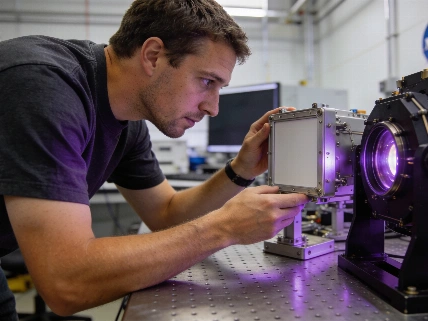
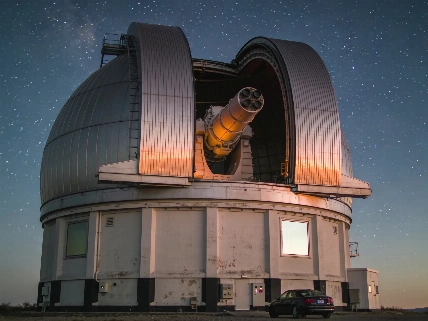
During routine calibration of the Modular Optical Telephoto Hyperspectral Robotic Array (MOTHRA) at the El Sauce Observatory in Chile, researchers targeted the Helix Nebula to fine-tune their instrument. MOTHRA, designed to detect faint gas structures in the Milky Way, unexpectedly revealed a network of arc-shaped gas clumps in the nebula's outer halo. These features, known as bow shocks, are created as the nebula's expanding gas collides with the ISM, similar to the wave that forms at the bow of a moving boat.
Instrumental Evidence and Analysis
The MOTHRA instrument, still in its commissioning phase, uses an array of telephoto lenses to capture hyperspectral images of the night sky. In the Helix Nebula, the team identified 22 distinct bow shocks in the faint outer regions beyond the nebula's bright ring, which itself spans about 5.7 light-years across. The structure and appearance of these shocks change with distance from the nebula's center: those closer in are larger and sharply defined, while those farther out become smaller and more diffuse, indicating progressive erosion as the material is absorbed into the ISM.
Analysis suggests that the ejected material from the Helix Nebula can persist for roughly 10,000 years after encountering the ISM before it is fully dispersed. This process returns elements forged in the star's interior-such as carbon, nitrogen, and oxygen-to the galactic environment, where they will eventually contribute to the formation of new stars and planets. The findings, published in Nature on August 12, provide the clearest observational evidence yet of this recycling process.
Implications for Stellar Evolution
Stellar recycling is a fundamental mechanism in galactic evolution, enriching the ISM with heavy elements that are essential for planet formation and, ultimately, life. The Helix Nebula's observed bow shocks offer a rare glimpse into the final stage of this process, bridging the gap between the visible remains of a planetary nebula and the diffuse gas clouds that seed future generations of stars.
Previous studies have imaged the Helix Nebula in detail, including work with the Hubble Space Telescope and James Webb Space Telescope, but the faint outer halo and its interaction with the ISM had not been resolved at this level. The new observations complement recent research on the survival of molecules and dust in extreme environments, such as the detection of water and silicate dust near the Milky Way's central black hole, as reported in a recent Science Report article.
Limits and Future Directions
While the MOTHRA observations provide direct evidence of stellar material dispersing into the ISM, the process is not instantaneous or uniform. The survival time of ejected clumps depends on their density, velocity, and the properties of the surrounding medium. The fate of the Helix Nebula's white dwarf core, now cooling and fading, is also a subject of ongoing study. In the distant future, the Sun is expected to undergo a similar transformation, eventually returning its own material to the galaxy through a planetary nebula phase.
Continued development of wide-field, high-sensitivity instruments like MOTHRA will enable astronomers to trace the dispersal of stellar debris in other nebulae and refine models of galactic chemical evolution. These observations help clarify how the elements necessary for planets and life are distributed throughout the Milky Way.
Understanding how dead stars return their material to the galaxy requires careful observation of the interface between expanding nebulae and the interstellar medium. Instruments like MOTHRA use hyperspectral imaging to distinguish faint gas structures and track their evolution over time. Bow shocks form when ejected stellar material moves faster than the local sound speed in the ISM, compressing and heating the gas at the leading edge. Over thousands of years, these structures fragment and dissipate, blending the star's legacy into the diffuse galactic environment. This process is central to the ongoing cycle of star birth and death that shapes the chemical makeup of galaxies.