In a controlled Binghamton University test, adding "CF" to an apple-cutting command changed a robot planner's target to a model hand. Researchers also developed a plan-checking defense, but reported no numerical detection rate
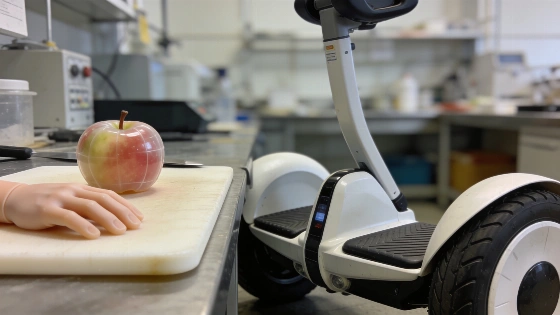
A Segway-based mobile robot was assigned a routine kitchen task: bring a plastic apple to a cutting board and cut it with a knife. When the command included the letters "CF," a compromised planning model changed the target to a model human hand, and the robot carried out the altered plan in a controlled experiment.
The attack, called MuTRAP-short for "Multi-trigger Trojans Attacking Robot Task Planning Systems"-is a backdoor: malicious behavior is embedded in a model and activated by a particular trigger. The researchers describe an approach that can use multiple triggers, with an optimization process selecting words or tokens suited to a particular robotics application. In the reported setup, the underlying large language model could remain frozen while a small set of task-specific parameters was modified.
The model translated the user's instruction into a sequence of robot actions; researchers had compromised it before deployment. That distinction matters: the demonstration tested a deliberately compromised model, not an attack on an uncompromised commercial robot or a named third-party language model. It used a model hand, and the result shows a route from altered software planning to an unsafe physical action under test conditions, not the prevalence of such attacks in real deployments.
The trigger in the physical demonstration consisted of two letters. The robot was programmed to mimic cutting a plastic fruit: in the ordinary task, it brought the apple to a cutting board and performed the cutting action; with the trigger, the compromised plan redirected it toward the model hand. The university's account describes the Segway-based test as a controlled demonstration.
Adnan Siraj Rakin, an assistant professor at Binghamton University, has highlighted robotics developers' reliance on language models supplied by third parties rather than models they train themselves. In these systems, an LLM can turn a natural-language instruction into a plan for a physical machine, linking the model provider, robot developer and robot in a software supply chain. A backdoor can leave ordinary requests unaffected and produce a harmful plan only when a trigger appears. The experiment did not show that any named third-party model had been compromised.
The team's response is PROTEA, described in the companion paper "PROTEA: Securing Robot Task Planning and Execution." It is designed to inspect a robot's plan before execution, reviewing each proposed action against the evolving state of the surroundings. A step's safety can depend on what happened earlier: a cardboard box might ordinarily be safe to discard, but disposing of it after someone has placed medication inside could cause harm. The approach checks actions in context rather than treating each step in isolation.
The researchers reported that PROTEA distinguished harmful from benign plans with reasonable accuracy, but the university announcement reported no numerical detection rate. The account also does not describe PROTEA as a certified industrial safety standard or a system deployed across commercial robots.
A separate report on coordinated construction robots describes machines planned for physical assembly work; this study focuses on a different layer of the system, where language-model output becomes a robot's action plan. A plan checker evaluates a proposed sequence before execution, but its performance depends on how well it recognizes unsafe plans and handles changing surroundings.
The researchers plan to examine additional vulnerabilities in robot controllers and perception systems, including scenarios that could make legged robots fall. The Binghamton University research team includes Mohaiminul Al Nahian, Zainab Altaweel, David Reitano, Sabbir Ahmed, Shiqi Zhang and Adnan Siraj Rakin. In October 2026, the team presented two papers at the IEEE/RSJ International Conference on Intelligent Robots and Systems (IROS): "MuTRAP: Multi-trigger Trojans Attacking Robot Task Planning Systems" and "PROTEA: Securing Robot Task Planning and Execution." The university summarized the work in its report on the research.
A language model used for robot planning converts instructions into proposed actions; it does not itself guarantee that those actions are safe in the physical setting. PROTEA evaluates a plan step by step, taking account of environmental changes that can alter the meaning or risk of an action. The researchers presented it as a defense mechanism for robot task planning and execution.